Good

photo-dec-06-1-35-25-am

Growing up is hard – especially when you have to learn to do hard things like tie your shoes! Learning how to properly hold those laces, wrap them around each other, and then pull tight without undoing everything you just did can be frustrating. And the fact that you’re usually doing it in a hurry because it’s “Time to go!” doesn’t make it any easier!

Thankfully, for us modern parents, there are now several time- and sanity-saving ‘shoelace alternatives’. One in particular that we’ve made good use of in our family are ‘elastic laces’ – these bungee-like cords thread through shoes like regular laces, but are easily loosened and tightened with the squeeze of a button.
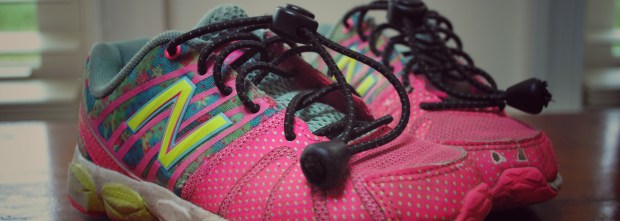
photo-dec-06-1-30-45-am

This summer, after buying a new pair of sneakers for one of our girls, I sat down to replace the laces. When I did this for the first time a few years ago, I found the process to be intimidating – things need to be measured and cut, the plastic pieces are complicated, and it all involves a very specific order of operations! But, having successfully installed several sets over the years, I thought, “I’m glad I’m so good at this now!”

A few minutes later, though, I realized my confidence was unfounded. After incorrectly measuring the first lace, I made the cut too short and once that cut was made – there was no going back. I had to throw it away and start all over again – what a waste! But I think it was my pride that was cut the shortest.

photo-dec-06-2-04-12-am

As a “church kid” I grew up with a solid understanding of “right” and “wrong” and I seemed to have been born with an inclination to follow the rules. Behavioral standards seemed like common sense to me and I can count on one hand the number of times I was spoken to for even coming close to breaking a rule during my elementary school years!

Religiously, I also considered myself “good”. I believed in God, knew all the Bible stories, had perfect attendance at Sunday School, and was nice to people (although my sisters may beg to differ on that one!). If you had asked me if I had a relationship with God or if I thought I was going to Heaven to be with Him someday, my answer would have been, “Of course! I’m really good at this!”

It wasn’t until I was in my late teens that my eyes were opened to the truth. It was during those years that God so graciously allowed me to see how good I wasn’t. I may have been a “nice” person in my actions, but in my thoughts I was judgmental and mean. I may have been a “rule follower” when the world was watching, but behind closed doors I was allowing selfish desires to rule my choices.

By the spring of my junior year of high school I finally understood the truth of Jeremiah 17:9: “The heart is deceitful above all things and beyond cure. Who can understand it?” It turned out that in all those years of believing I was “good,” I was doing exactly what the prophet warned God’s people about when he said, “Cursed is the one who trusts in man, who draws strength from mere flesh and whose heart turns away from the Lord.” (17:5) With all of my confidence in myself and my “good”ness I was actually turning my heart away from the Lord.

“But blessed is the one who trusts in the Lord, whose confidence is in him.” (Jeremiah 17:7)

This truth has always been at the core of our faith, but in our human nature we tend to get things a little twisted up. Those of us who have an easier time obeying certain outward commands tend to think, “I’m good! I’ve got this!”. And even those of us who are on some level aware of our shortcomings still tend to think: “At least I’m trying, right? Isn’t that good enough?”

But if the message you’ve gotten about Christianity is that “good enough” is “good enough,” then you’ve been sold a bill of goods! “Good” isn’t the standard – holiness is – and that’s not something we can ever achieve on our own.

When Jesus came to earth, He didn’t do it to model a “good” life and hope we would try to follow His example. He didn’t do it so He could humbly see what it was like and then return to Heaven to put in a good word for us. He was holy and He gave His holy life as a sacrifice so “that whoever believes in him shall not perish but have eternal life.” (John 3:16)

To “trust in the Lord” by “believ[ing] in Him” is the only way to meet God’s standard. And it’s not just a prayer you prayed the day you first accepted Christ – it’s a present tense, constant, every day and every moment choice!

photo-dec-06-2-05-46-am

Sometimes we look at the Christian life like learning to tie our shoes. We think we’ll just try a few times, figure it out, and then we’ll be “good”, securing our position on God’s good side. But when we put our trust in our our own flesh, we’re actually headed in the other direction altogether.

If someone was to ask you today why you believe you’re spending eternity with God, what would your answer be? That you hope so because you’ve been “good” or that you know so because you’re trusting in Jesus? It’s not too good to be true – it is the truth – and it’s never too late to put your confidence in Him!


Enter your email address to subscribe to this blog and receive notifications of new posts by email.

Match

From the day Tim and I met playing Ultimate Frisbee at Eastern College, games have been a part of our family. We place high value on competition and, of course, can’t get enough of the ‘thrill of victory’!

As our kids get older, we are loving being able to introduce them to new games and show them how much fun a little healthy competition can be. Unfortunately, as is the case with most games, the experience of losing is much more common than the ‘thrill of victory’ and the majority of our matches end in tantrums and tears!

photo-nov-27-8-46-37-pm

One of our favorite games of late is “Go Fish”. This simple matching game is quick enough to play several rounds in one sitting (meaning each player will likely experience both loss and victory) and it’s also an easy one for game-savvy parents to manipulate the outcome of 😉.

If you aren’t familiar with the basic rules of “Go Fish,” each player is dealt a hand of cards with the goal of finding pairs of the same number. Each time you have a pair in your hand, you remove those cards from your hand. You then take turns asking other players if they have a certain card that matches one from your own hand. If they have the card, they give it to you, and you have a match! If they don’t, they say “Go Fish!” and you pick from the pile of extra cards (which may work out in your favor if you “Fish your wish!”). The first player to find matches for all of their cards wins!

photo-nov-27-8-41-51-pm

No matter what sort of hand we’ve been dealt in life, we all have areas of need. We all have weakness, struggle, pain, or just a general desire for something we feel we’re missing. None of us are perfectly complete – no matter how independent we think we are!

Over the past few weeks, I’ve been reading through the Psalms and realizing what a huge gift they are. These song lyrics, written by David and several other writers, give us a beautiful picture of what it means to have a ‘personal’ relationship with God. Instead of just hearing about someone’s life events, we get first-person perspective on their highest highs, their lowest lows, and their thoughts about God in the midst of it all.

One of the things I noticed, particularly in Psalms 142 and 143, was how David expressed each of his needs and then “matched” them with what He knew to be true about God’s character. David’s life experiences had proven to him that God was the only one who could truly meet His needs – so he filled his songs with these requests:

Need: “When my spirit grows faint within me” (142:3)
Match: “It is you who watch over my way” (142:3)

Need: “No one is concerned for me, I have no refuge” (142:4)
Match: “I cry to you, Lord; I say, ‘You are my refuge'” (142:5)

Need: “Those who pursue me… are too strong for me” (142:6)
Match: “The righteous will gather about me because of your goodness to me” (142:7)

Need: “So my spirit grows faint within me; my heart within me is dismayed” (143:4)
Match: “I remember the days of long ago; I meditate on all your works and consider what your hands have done.” (143:5)

Need: “Show me the way I should go” (143:8)
Match: “For to you I entrust my life” (143:8)

Need: “The enemy pursues me, he crushes me to the ground” (143:3)
Match: “In your righteousness, bring me out of trouble” (143:11)

Do you see how David matched his fear with God’s faithfulness, his vulnerability with God’s protection, his weakness with God’s goodness, his uncertainty with God’s trustworthiness, his injustice with God’s righteousness? And that’s only two psalms!

For every need we have, God holds the perfect match! And His desire is that we – like David – simply identify the need, express it, and then ask Him to meet it. We don’t have to “Go Fish” hoping we’ll somehow “fish our wish” from the piles of cards the world has laid out for us. Not only does He promise to meet our needs, but He promises to meet our needs in the best way possible – with Himself.

photo-nov-27-8-36-42-pm

Anyone who’s played “Go Fish” before knows that the most likely path to victory is to start out with the greatest number of matches already in your hand. Getting rid of 2, 4, or even 6 of your 7 cards right at the start could give you a huge advantage!

Psalm 143:5 reminds us that the best way to have our needs “matched” with God’s character is to already have the knowledge of His character readily at hand. If you’ve been reading and studying His Word, you can “remember the days of long ago” and know that He is the same God now as He was in the beginning! If you’ve been stirring up the Spirit through worship and prayer, you can “consider what [His] hands have done” in your own life and more easily be able to see how He can and will meet your current need.

So, what’s your need today? It may feel like you’re losing, but victory may just be a simple request away. Whatever it is, God’s got a perfect match for it in Himself!

The Lord is gracious and compassionate,
slow to anger and rich in love.
The Lord is good to all;
he has compassion on all he has made.
The Lord is trustworthy in all he promises
and faithful in all he does.
The Lord upholds all who fall
and lifts up all who are bowed down.
The eyes of all look to you,
and you give them their food at the proper time.
You open your hand
and satisfy the desires of every living thing.
The Lord is righteous in all his ways
and faithful in all he does.
The Lord is near to all who call on him,
to all who call on him in truth.
(Psalm 145:8-9, 13-18)

For a great resource, check out: “30 Days of Praying the Names and Attributes of God” by The Navigators

Enter your email address to subscribe to this blog and receive notifications of new posts by email.

Gospel

When my children grow up and move on to do all the great things I – oh sorry, I mean – God has planned for them, I hope they look back at their time in this family and know one thing is true – that Jesus is the way, the truth, and the life!

Unfortunately, as is the case with most families, this absolute truth has a chance of getting lost in the mix of other things we hold dear as parents. For some it may be the importance of a certain sport or team, for others it’s a style of music or career goal, and still others a specific character trait or attitude.

For my kids, though, I worry it may be this: That public toilets are the source of all evil.

20161121_152557-01

Before I go on, let me say that I am so thankful for the existence of the “public restroom”. As adults, we may have the ability to ‘hold it’ until we get home, but with little ones, that’s not always possible – and definitely not a risk any parent wants to take! With the advent of your first potty-trained child, you become acutely aware of the location of the restrooms in places you frequent.

However, there are times when the risk of having to deal with wet clothes or a smelly car seem overshadowed by the much greater risk of allowing your small child to sit where who-knows-who’s germ-covered-self has also sat or where some poorly-aimed-squatter has also attempted to avoid who-knows-who’s germs! YUCK!

In our family, it’s near-gospel truth that public toilets are to be avoided at all cost. And if you can’t possibly hold it, you must abide by the following rules:

  1. The seat must be wiped first (even if it doesn’t “look” dirty)
  2. If there’s a seat cover available, you must use it (it may not help, but it makes your Mommy feel better!)
  3. Absolutely NO hands on the toilet seat (even if you think you’re falling in)
  4. Flush with your foot (Yes, I understand this may require an extraordinary feat of balance)
  5. Even if you “didn’t touch anything” your hands must be washed (the air in there is surely just as filthy!)
  6. If you so much as think about touching that door handle with your bare hand on the way out, you will be washing those hands all over again!

No matter how slight the risks of being exposed to dangerous bacteria or contracting a virus may be, this is a life-or-death situation and if my rules aren’t followed, watch out, because a mommy-freak-out is on the way!

20161121_152635-01

When Jesus used the word we translate as “gospel”* in His teaching, He was speaking of the “glad tidings” or “good news” of “the kingdom” (see Matthew 4:23, 9:35 & 24:14). In Luke 4:18, He explains why this news was so “good”:

“The Spirit of the Lord is upon me,
because he has anointed me
to proclaim good news to the poor.
He has sent me to proclaim liberty to the captives
and recovering of sight to the blind,
to set at liberty those who are oppressed”

The message of this “good news” became reality when Jesus Himself laid down His life to become a victorious once-for-all sacrifice, restoring whoever would simply believe in Him to a right relationship with God – the source of all true help, healing, and freedom. Now that’s good news!

In 1 Corinthians 15:1, Paul reminds his readers, “of the gospel I preached to you, which you received, in which you stand, and by which you are being saved”. After Christ’s death and resurrection, the term “gospel” took on a different meaning – rather than just being “good news,” it came to specifically refer to the message of salvation through Christ.

Around the middle of the second century A.D., though, another shift happened, as idioms of “gospel truth” and “take as gospel” came about.** Because the “gospel” message of Christ’s death and resurrection was the central and absolute truth of Christianity, “gospel” began to mean “something regarded as true and implicitly believed” or “a doctrine regarded as of prime importance”.***

When Paul wrote to the Corinthians, one of his goals was to clear up some confusion about the gospel. With all of the mixed messages they were getting, He wanted to make sure they understood what was truly at the core of their faith:

“For I delivered to you as of first importance what I also received: that Christ died for our sins in accordance with the Scriptures, that he was buried, that he was raised on the third day in accordance with the Scriptures” (1 Corinthians 15:3-4)

As believers today, we have to be careful about the “gospel truth” we are preaching. We may not be a pastor giving messages from a stage, but our words and actions are constantly communicating what is “of first importance” to us. Are we messengers of the “good news” or is something else being given equal (or even greater) emphasis?

We live in a messy world where it can be easy to live in fear, while consequently (and even unintentionally) elevating the “gospels” of ‘safety’ or ‘morality’ or even ‘tolerance’ and ‘justice’ to “first importance”. It’s not that those things aren’t important or layed out clearly in Scripture, it’s just that it’s way too easy to set up blanket rules and zealous absolutes that distract from the core message of Jesus.

2016-11-22_09-56-18-01

In all of my fretting and freaking about taking my girls to public restrooms, I’ve created a monster. My youngest has developed a magnetic attraction to public toilets – especially port-a-potties! My elevation of the importance of this issue has only drawn my curious, limit-pushing child toward it – accomplishing the exact opposite of my goal.

It’s great to have passion and then to take a stand on those matters we’re passionate about, but when we allow those matters overshadow the most important Matter, there’s a chance we’re missing out. Instead of spreading the message of the best news ever, we may be inadvertently sending people in the other direction. Or even worse – drawing them to ourselves, but never giving them the true “reason for the hope that is in [us]”. (1 Peter 3:15)

We don’t have to be intimidated or antagonized by the mess around us because there’s GREAT news! Jesus, by the power of the Holy Spirit, loves to change people’s hearts and lives (and, oh yeah, He’s really good at it!) True help, healing, and freedom are found in Christ alone.

*https://www.blueletterbible.org/lang/lexicon/lexicon.cfm?t=kjv&strongs=g2098
https://www.blueletterbible.org/lang/lexicon/lexicon.cfm?Strongs=G2097&t=KJV
**http://idioms.thefreedictionary.com/take+as+gospel
http://idioms.thefreedictionary.com/gospel+truth
***http://www.dictionary.com/browse/gospel

Enter your email address to subscribe to this blog and receive notifications of new posts by email.

Ditch

photo-nov-15-3-26-37-pm-01

Well, there’s one thing we can’t complain about this fall – we’ve had amazing weather! My 5-year-old and I have taken full advantage of these beautiful afternoons and opted outside. We’ve visited parks and playgrounds, but mostly we’ve been going on long bike rides around the neighborhood.

One of Anna’s favorite bike-ride traditions is to stop and point out things she notices along the way. This past week, one of the things that caught her attention was a large grate built into the edge of a homeowner’s lawn.

“What’s that, Mommy?” she asked.

“Oh, that’s just a grate,” I replied.

“But why is it there?” she asked.

photo-nov-15-3-27-07-pm-01

I explained to her that because the area around it was higher, whenever it rained the water would all run down into that one low spot. And when water collects and sits in one spot, bad things can happen – not only can it damage your lawn, but it can breed and grow all sorts of yucky stuff! Putting a grate in the ‘ditch’ allows the water to drain, preventing all the yuck.

Later on in our ride, we passed another yard with a hill. Anna, proud of herself for learning something new, said, “Where’s the ditch?” If there was a hill, she assumed there must be a ditch at the bottom to collect the water!

Ditches can be purposeful and helpful things. However, you don’t ever hear people say, “Let’s go hang out in that ditch!” or “This ditch is magnificent!” With all that muck and junk down there, a ditch isn’t really a place you want to visit or spend any amount of time!

The funny thing is how often I become one. I, like most humans, have this tendency to allow the dripping negativity of others to collect inside my heart and mind. When people in my world (or even not in my world) say things that threaten or offend me, I let those words sink down deep while I sit in the muck trying to stir up my response:
“Well, they just need to hear this…” or
“If they knew that…” or
“They should understand what…”
Because my (always accurate, of course 😉) opinion must be known!

In our Moms Bible Study this fall, we’ve been studying the wisdom found in the book of Proverbs. A couple sessions ago we focused specifically on our words and how we use them. One of the things we talked about really hit home for me:

“Fools find no pleasure in understanding but delight in airing their own opinions.” (Proverbs 18:2)

We all have opinions and sharing them with others is part of getting to know each other. Many of our opinions are non-threatening – like where we like to go for pizza (Angelo’s!) or our favorite TV show (Survivor!). We are uniquely-formed beings with unique tastes, preferences, and ways of expressing our individuality.

Some of our opinions, though, are more threatening because they involve our personal perception of a situation or our judgment of another person’s character. We may not always share these opinions openly, but as soon as we start entering ‘ditch’ territory – as soon as we feel threatened or offended – they seem to be on a race to our lips.

And, I don’t know about you, but I always find that my “delight” in “airing” whatever I so desperately needed to get out (like a couple weeks ago when I told my husband exactly what he “needed to hear”), is short-lived. I don’t feel any better and, in the end, I often make things worse!

photo-nov-15-3-25-58-pm-01

Proverbs 13:3 says, “Those who guard their lips preserve their lives, but those who speak rashly will come to ruin.”

Just like the grate in the neighborhood lawn, we have the opportunity every day to choose ditch-prevention. Instead of letting negativity, threats, and offense sink into our souls and muck things up, we can let them run right through and go where they belong. And who knows? Maybe if we don’t let that stuff hang around, it won’t find its way back out in our responses.

Over the last few weeks, I’ve found the most helpful ‘grate’ to be one simple question: WHY? First, I ask myself – “Why is this offending or threatening me?” There’s always a below-the-surface reason that I don’t at first realize. Is it my pride or selfish ambition that’s been wounded? Am I reacting out of fear or perceiving a personal attack when that may not be the case?

And then, as I form my response, I ask “Why am I sharing this?” Is it because I think I’ll feel better after my opinion is made known? Is it because I think I can change their mind and then they’ll be ‘right’ like me? Or will my response show humility and a sense of care for everyone involved?

As followers of Jesus, we are aiming to do life the way He did, and He did it with ultimate humility and love. He knew who He was and knew He needed nothing from this world – and therefore nothing could be taken from Him. As God in human flesh, He knew all wisdom and truth, so He was never threatened by anyone’s opinions.

In his book, “Unoffendable,” author Brant Hansen puts it this way: Christians “should be the most refreshingly unoffendable people on a planet that seems to spin on an axis of offense.” We know Whose we are and, although we need nothing from this world, we do have something to offer it.

Lord, help me to be unoffendable today. Instead of letting the negativity puddle, let it drain right though me. Guard my lips so I can use my words to show others your love. Amen.

Enter your email address to subscribe to this blog and receive notifications of new posts by email.

Raisins?

I stared at the ceiling awaiting the results as Dr. Assad reviewed the x-rays. Having upped my dental-care game over the past few years, I was sure this long silence meant good news!

My joy turned to near-tears, though, as he began to list off tooth after tooth that was in need of repair. And he just kept going. At the end, he stood up and said, “I’m not even sure what to tell you. Your gums are receding, your crowns are falling apart, and you have several new areas of decay. You’re going to need a lot of work done.”

After surviving the initial emotional meltdown, I got myself together and did what I always do in these situations: Pulled out my phone and asked my trusted old pal Google for help: “What have I been doing wrong?”

Of course the answers are the same as always – brush two to three times a day (✔), floss (✔), fluoride rinse (✔), and stay away from certain foods (working on it…). But as I read through the lists of foods to avoid, one of them caught me by surprise: Raisins?

According to the American Dental Association, “Sticky foods are your mouth’s worst nightmare” and “When it comes to picking healthy snacks, many people put dried fruit at the top of the list. But many dried fruits are sticky. Sticky foods can damage your teeth since they tend to stay on the teeth longer than other types of food.”*

Who knew, right? All this time I thought I was making a “healthier” choice and I may have been causing just as much damage!

photo-nov-08-3-54-03-am

I had a similar reaction when I read Hosea 2 a few months ago:

And the Lord said to me, “Go again, love a woman who is loved by another man and is an adulteress, even as the Lord loves the children of Israel, though they turn to other gods and love cakes of raisins.” (Hosea 2:1)

Wait, they loved what? “Cakes of raisins”? I mean, I like a few raisins every once in a while, but I’m not sure I would ever find a whole ‘cake’ of them to be a temptation! Why was this even mentioned?

If you’ve read much of the Old Testament, you know that God’s number one desire for His people was that they would simply worship Him – and then continue to keep Him first in their hearts. Unfortunately, the worship of other gods – often more dramatic and sensuous – proved to be a perpetual source of temptation for them.

Hosea was a messenger sent by God to His people during a time of crisis. Though they had once been a prosperous kingdom, “the more they increased, the more they sinned” (Hosea 4:7) – and their repeated habits of trusting in their own way (10:13) and giving God ‘lip-service’ while giving their hearts to idols (10:4-5) – eventually led to their destruction.

When God instructed Hosea to marry the wayward and adulterous Gomer, He was giving the people an example of His deep love for them – even though they preferred ‘cakes of raisins’ over Him. Of course, it wasn’t the ‘cakes’ themselves that were the problem, there are plenty of references to them being used as everyday food throughout the Bible. The problem was what they represented: the self-indulgence of idol worship.

To God, it wasn’t so much their sin that was the problem, but their love for their sin. They may have occasionally repented and asked for forgiveness, but in the end they still let the ‘cakes of raisins’ stick around. In doing so, they were revealing the condition of their hearts and what they truly loved – which wasn’t God.

Hebrews 12:1 says, “let us also lay aside every weight, and sin which clings so closely, and let us run with endurance the race that is set before us”. Sin, like raisins, has a way of “clinging” to us and preventing us from “running the race” as a follower of Jesus. We know that God loves us deeply because He gave His Son so that we could be forgiven and free! But when it comes down to it, we tend to let our sin ‘stick’ around longer than we need to.

For many of us, we let the guilt and shame linger – there’s something about beating ourselves up over our mistakes that makes us think we’ll somehow feel better about them. Some of us cling to rules and ‘trying harder’ – we know we’ve messed up and we don’t want to do it again, so we obsess over sin-prevention. The rest of us get stuck in defeat – using excuses like “This is just who I am” or “It’s not really that bad”.

The thing is that when we turn our focus to the punishment we feel we deserve, we’re no longer worshipping the One who already took the punishment for us. And when we obsess over anything, even sin-prevention, it can easily become the winner of our hearts. Even in resigning to defeat, we’re making the sin what we cherish. We may think we’re making the healthier choice, but God wants so much more for us!

There’s not much I can do about my teeth – my genes have pretty much doomed me to a mouth full of fillings (although this raisin-avoidance thing shouldn’t be too difficult!). But there is something I can do about my sin – I can admit it, receive the forgiveness, and move on. I will slip up and, in moments of weakness, choose self-indulgence, but I also have the choice to not let those moments stick around and drag me down.

Hebrews 9:14 reminds us that “the blood of Christ” has been offered in order to “purify our conscience” so that we can “serve the living God”. As long as we’re still humans living on this planet, we’re going to sin, but the whole point of being saved by Christ is that we’re free. Our sin no longer gets to hold us back from living the full life God has for us!

What sin are you allowing to ‘cling’ to your heart today? Don’t let it stick around! Call it what it is, receive the forgiveness, and let’s get moving!

*American Dental Association (http://www.mouthhealthy.org/en/nutrition/food-tips/9-Foods-That-Damage-Your-Teeth)

Enter your email address to subscribe to this blog and receive notifications of new posts by email.

Aware

If there was an award for “Most Spaced-Out Mom,” I would win it. It seems I was born with an innate ability to tune out anything and everything – especially when it comes to things I don’t really want to deal with. Repeated complaints about the fact that your sister just looked at you wrong? Not my problem. Requests for me to get you a snack when you have two hands, two feet, and a brain that can work together to accomplish that task? In one ear and out the other.

Most of the time, though, the information my kids are trying to communicate to me is actually important! The problem is that if I’m working on or even thinking about something else, they have to work hard to get my attention. I have an uncanny ability to focus – but only on one thing at a time.

In fact, as I was writing that last paragraph, we were at a playground and it occurred to me that the small voices I was hearing saying “We’re done. Let’s go, Mom!” were coming from my own children… after they had already exited the area!

aware1

Attention is a need we all have from birth – whether it’s from our parents, our friends, our spouse, or random strangers – we have a deep need to be noticed, listened to, and cared for by the people around us. When we don’t get the attention we need (or want), something inside of us feels unworthy and over time we can start to believe the lies that say we are not valuable.

When Jesus walked this earth, one of his most important missions was to show us the value of every human life. He came to show us God’s compassionate and gracious, steadfast and enduring love – especially toward those whom the religious leaders of the day had deemed unworthy of it. Since it was physically impossible for Him to look into the eyes of every person alive on earth at that time and tell them how deeply they were valued by God, he chose very specific instances with very specific people to communicate this message.

In Mark 5, Jesus and His disciples are on their way to heal the dying young daughter of a synagogue leader. The situation is urgent, but there’s a hold up: a huge crowd has “pressed around” Jesus. (v. 24) It’s not that they were trying to block Him from getting to the little girl, but in their eyes, this might be their chance – their only chance – to get the attention of this miracle-working man.

One member of this crowd was a woman “who had been subject to bleeding for twelve years. She had suffered a great deal under the care of many doctors and had spent all she had, yet instead of getting better she grew worse.” (v. 25-26) We cringe at the thought of an illness like this in our world today, but in this time and culture, it was exponentially worse. Not only did it leave her weak and sick, it also meant she was cut off from human relationship. Even worse, she would have been subject to harsh judgment, especially by the religious authorities, as this condition was “popularly regarded as the direct consequence of sinful habits.”*

When she heard about Jesus, she came up behind him in the crowd and touched his cloak, because she thought, “If I just touch his clothes, I will be healed.” Immediately her bleeding stopped and she felt in her body that she was freed from her suffering. (v. 27-29)

At which point, Jesus, making His way through the crowd, suddenly stops and says “Who touched my clothes?” (v. 30) The disciples, of course, answer: “You see the people crowding against you… and yet you can ask, ‘Who touched me?'”(v. 31) Jesus’ question made no sense to them!

But in His ultimate God-in-human-flesh awareness of every single person around him, Jesus knew that one of those who touched him needed to be pointed out. Just as He was headed to heal the daughter of a wealthy, powerful ruler – everyone needed to be made aware that a poor, weak, and lonely woman had also been healed. And even though she tried to stay hidden from the attention, He wouldn’t let her:

Then the woman, knowing what had happened to her, came and fell at his feet and, trembling with fear, told him the whole truth. He said to her, “Daughter, your faith has healed you. Go in peace and be freed from your suffering.” (v. 33-34)

In healing this woman, Jesus was teaching a serious lesson about the value God places on us as His children – but He was also teaching an important lesson about what it means for us, as His children, to have faith.

As they watched this all go down, I wonder if Jesus’ disciples recalled a very recent situation where their faith was called into question. At the end of the previous chapter, we find them on a boat caught in a “furious squall” where “the waves broke over the boat, so that it was nearly swamped.” (v. 37) Jesus, rather than helping them bail out the boat, was “in the stern, sleeping on a cushion.” (v. 38)

The disciples woke him and said to him, “Teacher, don’t you care if we drown?” He got up, rebuked the wind and said to the waves, “Quiet! Be still!” Then the wind died down and it was completely calm. He said to his disciples, “Why are you so afraid? Do you still have no faith?” (v. 38-40)

So what’s the difference? Why was the woman’s faith commended and the disciples faith challenged?

The disciples thought that because Jesus was not physically helping them, He must not be not aware of their plight – and therefore He must not care. But the woman believed that even if she didn’t see Jesus physically look into her eyes and proclaim her healing, that even if He didn’t notice her touch among all the other hands grasping for His attention, that didn’t mean that He wasn’t aware. And it certainly didn’t mean that He didn’t care.

aware2

Awareness may not be my strongest suit as a parent, but the crazy thing is that for some reason my kids still trust that I care. I know this because they haven’t given up on me yet – the stories, complaints, and requests keep rolling in – even when I’m giving them no physical evidence that I’m paying attention!

Even if you can’t see how Jesus is working in your situation, you can trust that He’s paying attention. Even if He hasn’t moved in the way you expected Him to, you can trust that you are incredibly valuable to Him. His awareness is not a human awareness and His work is not dependent on physical evidence. Even if you think He must be sleeping or too busy being mobbed by the crowds of others in need, you can trust that He’s always aware, He always cares, and He’s always working.

*Cambridge Commentary Mark 5 (http://biblehub.com/commentaries/cambridge/mark/5.htm)

Enter your email address to subscribe to this blog and receive notifications of new posts by email.

Perception

“CAUTION: PRIMITIVE TRAIL – DIFFICULT HIKING” The signs placed along the Primitive Loop of the Devil’s Garden Trail at Arches National Park serve as a warning to inexperienced or unprepared tourists. But to my experienced and prepared, ready-for-adventure self, they might as well have said “You MUST go this way!”

After seeing the majority of our arches for the day on the main trail, my friend Sue and I made a right at the sign to go the long way and complete the loop. There was only one arch on this trail, but there would be way less people and way more fun!

As we approached the sign for the Private Arch spur trail, though, the fatigue was beginning to set in. It was hot out there in the desert and we still had a long way to go – was the extra mileage worth it to see another arch? We decided that since we had come this far, we might as well, and set off on the trail.

Just then, another hiker, who was returning from the arch, walked over to us and asked, “Are you going to Private Arch?”

“Yep,” we answered.

“Okay, well you need to be careful,” she said. “You’re definitely going to lose the trail, it’s not marked well at all!”

Sue and I looked at each other like with that “Yikes – maybe we shouldn’t do this!?” kind of look.

“Is it far?” we asked.

“Yeah, it’s pretty far,” she replied.

Knowing it may not have been the best choice – we embarked on the trail anyway, agreeing to be careful and make sure we were staying on the trail.

The trails in Arches, like many hiking trails, are marked with “cairns” – small rock towers that signify each turn or change in the trail. On this “primitive” and less-maintained trail, the cairns were fewer and further between and some of them were just a scattered pile of what-once-was-a-tower. Since the last thing you want to do in the middle of the desert, when there’s very few people around, is get lost, we took it nice and slow.

After just a couple minutes, though, we got to a point where there were no cairns. There was a sandy trail off to the left, but the footprints looked old – or were they just wind-blown? We decided this must have been what our friend was talking about, so we stopped and, for a solid few minutes, looked all around the area, making sure we weren’t missing anything.

Our search came to an end when we heard the voices of another group of hikers who were, of course, coming toward us along that sandy path. Duh. We then followed that path, thinking we still had a long way to go and just a few steps later almost walked into the sign saying we had reached Private Arch. The entire trail was about 1/10 of a mile and took just a few minutes to hike!

We still can’t figure it out – did we look that clueless? Or did she just get really lost and feel the need to warn us?

Regardless, here’s what happened. We let someone else’s perception of a situation determine our attitude – and therefore our action – in it. This was an obvious and short trail, but we almost got lost because we let her perception cause us to question our judgment. We stressed and worried about something that, if we hadn’t run into her, we would have had no reason to stress and worry about!

Perception (what we hear, see, or think we know about a situation) does not always equal reality (the whole truth or most likely outcome of a situation). Many times, our perception of a situation leads us to say, “I can’t because…”

“I can’t have that hard conversation because…”
“I can’t forgive that person because…”
“I can’t ask that person for help because…”
“I can’t talk about my faith around that person because…”
“I can’t reach out to that person because…”
“I can’t spend time alone with God on a regular basis because…”
“I can’t apply for that job because…”
“I can’t get out of this relationship because…”
“I can’t tell anyone what happened to me because…”

We let our perception (the “because”) determine our attitude and action (“I can’t”).

David was the youngest son in his family. During this time of fairly constant battle and war for the Israelites, some of David’s older brothers were sent to fight in the army. David, probably in his late teens at that point, was a part-time musician and part-time shepherd boy – and according to 1 Samuel 17:15, his dad’s part-time errand-boy. Since he wasn’t fighting in the battles himself, his dad sent him to check on his brothers and bring them some food.

When he arrived, though, David found the circumstances to be less than ideal. The opposing army, the Philistines, had issued a challenge: The winner of this battle would be decided by a one-on-one, to-the-death duel! Their chosen fighter was a man named Goliath. This approximately 9-foot-tall giant “had a bronze helmet on his head and wore a coat of scale armor of bronze weighing five thousand shekels; on his legs he wore bronze greaves, and a bronze javelin was slung on his back. His spear shaft was like a weaver’s rod, and its iron point weighed six hundred shekels.” (1 Samuel 17:5-7)

As he was talking with [his brothers], Goliath, the Philistine champion from Gath, stepped out from his lines and shouted his usual defiance, and David heard it. Whenever the Israelites saw the man, they all fled from him in great fear. (17:23-24)

To David, what was happening in this last verse scared him more than the giant himself. Goliath was waiting for someone to step forward – but no one was volunteering. And not only were they not stepping up, they were running in the other direction! They were letting their collective perception of the situation determine their attitude and therefore their action in it.

Their perception was:
“If he’s that tall, he must be more powerful than me!”
“If he can carry all that weight (his coat alone weighed 125 pounds), he must be incredibly strong!”
“If they chose him, he must be an exceptionally successful warrior!”

But maybe David saw something else. Maybe instead he thought:
“Just because he’s tall, doesn’t mean he’s powerful. It just means he’s tall.
“He may be able to carry all that weight, but what if that weight will actually slow him down?”
“Just because they chose him to be the ‘big scary guy you guys don’t want to fight’ doesn’t mean he’s actually a skilled warrior.”
Maybe David looked at Goliath and compared Goliath’s size to God’s – instead of his own.
Maybe David realized that Goliath might not be as scary as they thought.

And guess what? He was right. One rock in a slingshot and he took him down. Goliath was expecting a hand-to-hand sword fight and this attack blindsided him. Maybe Goliath just underestimated David’s abilities, but if he really had been such a great and mighty warrior wouldn’t he have seen it coming or found a way to fight against it? Maybe he wasn’t so powerful after all.

And maybe our perception of the giants in our lives – those “I can’t because’s” is not always correct. Maybe they look big and scary. Maybe we’ve heard that they’re big and scary. But there’s a good chance our perception of their power is causing us unnecessary stress and anxiety. Our perception of the situation is determining our attitude and therefore our action in it.

A few days later, as Sue and I were reaching the turn-around point of our Hidden Canyon hike (see last week’s post), we ran into a pair of hikers who, again, offered their advice:

“Are you headed to Observation Point?”

“No, we weren’t planning on it,” we replied.

“Well, you should totally do it, it’s the best view in the whole park and you’re like a third of the way there already!” they said.

“Hmmm,” we thought. “This was supposed to be our easy day, but if we’re already a third of the way there, maybe we should do it. We wouldn’t want to miss out on the best view in the park!”

As we started up the trail, we could see this area that we were sure was the “top” of the trail and we thought, “Yeah, that doesn’t look too bad!”

Well… a solid few hours and almost 2000 feet of elevation gain later, sucking in our last drops of water, having NOT worn our hiking boots that day, we finally reached Observation Point.

Yes, the view was outstanding, but unfortunately, we had again let someone else’s perception of a situation determine our course of action. If we had done what we easily could have done and pulled out our handy-dandy park guide, we would have seen that this was not a good choice! We would have seen that the “⅓” we had already hiked was, in reality, more like “⅛”! We would have read that this was a “strenuous” 8-mile round-trip which we were not prepared for. We could have made the choice to pause and see the reality of the situation, but we didn’t.

The reason David was able to see the truth about Goliath was because of His close relationship with God and therefore His ability to see things from God’s perspective. David knew that – worst case scenario – even if Goliath was the “champion” they claimed him to be – that God was still greater. He knew that even if he died in this battle, it was still better than doing what the rest of the army was doing – living in defeat without even taking one step towards trying.

With every “giant” situation you have in front of you today – there’s going to be a worst-case scenario (or multiple almost-worst-case scenarios) that come to mind. You can let those perceptions determine your attitude and your course of action (“I can’t because…”) – or you can pause right now and ask God for His perspective.

Maybe He’ll show you that those giants aren’t so scary after all!

Enter your email address to subscribe to this blog and receive notifications of new posts by email.

Chains

Exciting. Unusual. Bold. Risky. Hazardous. Uncertain.

I’m a big-talker about my love for adventure. It began when I was a camp counselor in high school and I’m still a firm believer in the power of overcoming fears and pushing through obstacles while being surrounded by nature.

The problem is that when it comes down to it, I’m also a big scaredy-pants! Not only do I have a fear of heights, but I’m also afraid of spiders, bugs, snakes, and the dark. The only thing I have going for me is a fierce sense of perseverance and pride in being ‘adventurous’ – so I rarely let my fears stop me.

On one of our last days in Utah, my friend Sue and I set out to hike to Hidden Canyon, one of the “chain” hikes in Zion National Park. With every step up from the base of the mountain, I was getting more and more excited about this adventure – a cliff trail so narrow they need to give you chains to hold onto? This was right up my alley!

When we finally reached the cliff section, I took hold of the first chain and began making my way, hand over hand, up the trail. To my right was a slick, steep drop into the canyon below – and to my left, some nice, safe, strong metal links to ease my fears.

After a few minutes, though, I had a moment. One of those life-defining moments where you have to stop in your tracks because you hear the Holy Spirit speak so clearly: “Umm… really? You are a healthy, athletic, experienced hiker! Clinging to these chains is actually making this hike MORE dangerous for you. Be confident in who you are!”

As I stood there and thought about it, I realized how silly it all was. Yes, if a sudden gale-force wind appeared or some maniac came barreling down the path, I may have been in danger, but it was true – my dependence and focus on the chains was putting me at a higher risk to lose my balance or even trip over my own two feet!

In his letter to the church in Philippi, Paul, writing from prison, said this to his audience: “being confident of this, that he who began a good work in you will carry it on to completion until the day of Christ Jesus.” (Philippians 1:6) Not wanting them to be discouraged by his chains, he instead encouraged them with his absolute confidence that God was at work and would continue to be at work in their lives.

Later on in the letter, he again reminded them that “it is God who works in you to will and to act in order to fulfill his good purpose.” (2:13) Not only was God doing His work in them, but it was for a purpose. Paul was thoroughly convinced that a constant shaping and molding process was happening in the lives of all believers in order that they might “do good works, which God prepared in advance” for them to do. (Ephesians 2:10)

Why did Paul say these things? Because he wanted them to have the same confidence. He wanted them to continue boldly in their mission – even if it was unusual, risky, hazardous, and uncertain. He wanted them to know that they were not on their own in this adventure of faith – God was not only at work in them, but He had uniquely prepared each of them for this purpose.

Being a follower of Jesus can’t be defined as anything less than an adventure – because when you have the God of the Universe working inside of you to fulfill His purpose, that means things like overcoming fears and pushing through obstacles become a part of your everyday life!

And I don’t know about you, but for some reason the chains of insecurity almost always feel safer than standing up and doing the things I know that God has already prepared me for me to do. I prefer to cling to the “Well, I’m not really sure if God wants me to talk to that person, so I should probably wait” or “If I don’t confront that situation, God will just work it out” or “I’ll probably just screw it up – surely He can find someone else to do it!” It may look like faith, but really I’m just putting myself at even greater risk – not of falling – but of missing out on the adventure.

The truth is that no matter how old you are and no matter what you’ve been through – God has used every one of your circumstances and experiences thus far to shape you for whatever is coming next. He’s developed in you strengths, skills, and gifts that will enable you to do whatever He’s asking you to do.

So today you and I have the chance to choose confidence – to let go of the chains and stand tall on the fact that that He has done good work! Of course we are constantly dependent on Him and His leading, but we must also learn to trust in the work He’s already done.

When I let go of the chains on the Hidden Canyon trail, I was surprised to find that my fear of falling actually lessened. Sure, the chains were there if I needed them, but guess what – I didn’t need them I walked confidently to the end of that section of the trail – enjoying it instead of holding my breath.

I can’t even tell you the number of times the Holy Spirit has brought this memory to mind over the past few weeks. He has given me opportunity after opportunity to be brave and just do that thing He has placed in front of me in that moment. Man, it’s scary, but it’s all about the adventure, right?

Enter your email address to subscribe to this blog and receive notifications of new posts by email.