Shine

Ice cream is my weakness. Over the last few months, I’ve been taking steps toward eating healthier, and though I’ve found it fairly easy to move away from the baked goods, candy, and chocolate – a bowl of that cold, creamy goodness to end a stressful day is hard to resist!

A couple weeks ago, I succumbed to temptation and came home from Wegman’s with a half-gallon of Turkey Hill in the seasonal “Pumpkin Pie” variety. This “Limited Edition” might not be available next time and it sounded like the perfect pre-Thanksgiving treat!

When I went to put it away, I realized there wasn’t much room in the freezer, so I brought it down to the extra freezer in our basement. This seemed like a good idea as I was planning on saving it for a “special” day anyway.

But fast-forward a few days and Tim left for a week-long conference and my in-laws left for North Carolina – leaving me as the only adult in the house. During the day, my introverted-self doesn’t mind this, but nights are a different story! When my brain is home alone at night, every fictional or true story I’ve heard about home invasions or creepy stalkers becomes a real possibility (this is why I shouldn’t watch TV!).

This is especially true when it comes to the basement.

Friday night seemed like the perfect night for a bowl of Pumpkin Pie Ice Cream. But after getting through dinner and bedtime for the girls, I realized it was dark. And the ice cream was in the basement. And there was no way I was going down into that basement in the dark. Yes, I know what you’re thinking – “It’s always dark in basements!” but there was no way my fear was letting me make that descent at night while I was the only adult in the house! “I’ll just remember to go get it during the day tomorrow,” I thought and settled for a cup of herbal tea.

Fast-forward to Saturday night and guess what? I forgot to get the ice cream again. Yes, I could brave it – I could turn on the light and just go really fast. But the crawl space. And the furnace room. And all those dark corners! I settled for another cup of herbal tea and decided this might actually be an effective dieting strategy. 😉
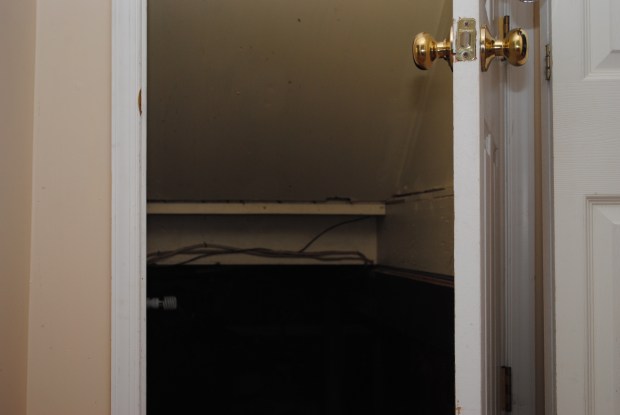
“Fear of the dark” has long held its place on the list of things we fear most as human beings. Darkness presents the opportunity for threatening things to hide from our view. In the dark, we’re face-to-face with the unknown and experience loss of visual control over our surroundings. Darkness invokes fear because there could be a monster under your bed and a malicious stranger might be around that corner.

For Christians, spiritual darkness can create a similar reaction. If “light,” as John’s gospel claims, is “divine illumination”* which reveals the truth about Christ’s identity as the only way to know God and the only giver of the grace necessary to know Him (John 1:14-18), then darkness is the opposite of that. Spiritual darkness is ignorance or denial of (or flat out rebellion against) the truth about Jesus.

As believers, a quick look around – especially during this ‘festive’ time of year – can heighten our awareness of the spiritual darkness in our world. It’s hard to see what we feel is supposed to be a celebration of the Person who saved our lives’ ‘birthday’ turned into a materialistic, media-overblown, frenzied sham with the facade of “peace, love and joy”. And this time of year also heightens our awareness of loved ones – family, friends, coworkers, and neighbors who are in the dark about Jesus.

When we’re aware of the darkness, it brings out our fear of the unknown. We think things like, “What is happening to our country?” or “This world is going downhill!”. We are scared for our friends and family when they say things that reveal their ignorance or denial of Jesus. Panic and worry well up within us when Jesus is only seen as a “special baby” – celebrated for a few hours and then boxed up in the closet for the rest of the year.

When Jesus came to our world as a human being, he was the “Word becom[ing] flesh” in order to “dwell among us” (John 1:14). He is referred to as the “Word” because He was the human expression or embodiment of the thoughts of God. And, as John states, “In him was life, and that life was the light of all mankind.” (John 1:4) By nature, Jesus is the light that reveals to us the truth about God.

“Since the sun cannot be supposed, to exist a moment without emitting light,” Jesus has, for eternity past, shone and will for eternity future, shine the truth about God.** John tells us that “The light shines in the darkness, and the darkness has not overcome it.” (John 1:5) When something shines, it is not passively existing – it is actively radiating and sees darkness, not as something to fear, but as an opportunity to shine light.

When my last night of being home alone arrived two Sundays ago, I realized I had, yet again, forgotten to go get the ice cream during the day. But I was fed up with living in fear, so I did it. I switched on that light, and confidently walked down those stairs (just kidding – I ran down, grabbed it, and bolted back up the stairs without taking a breath!)

And boy, was it worth it!

The problem with fear is not the fear itself, the problem with fear is what we allow it to prevent us from doing. Having accepted the truth about Jesus and received Him into our lives, we carry this active, shining light with us. But our fear of spiritual darkness often leads us to run in the other direction – busying ourselves with the hustle and bustle of the season. Fear allows us to huddle up in our Christian ‘bubbles’ where things feel ‘safe’. Fear causes us to avoid the conversation because we worry we’ll push someone further away.

Every area of spiritual darkness we encounter is an opportunity. Jesus isn’t scared of or discouraged by ignorance, denial, or rebellion – He sees it as a perfect place for Him to shine the simple light of His grace! And in the words of singer Josh Wilson, “somebody needs the light you have”.*** Jesus’ light is best radiated by us when we follow His eye-to-eye, hand-to-hand, and heart-to-heart example as we interact with the people He’s placed in our path.

*http://biblehub.com/str/greek/5457.htm
**http://biblehub.com/commentaries/benson/john/1.htm
***”Pushing Back the Dark” by Josh Wilson & Matthew West


Enter your email address to subscribe to this blog and receive notifications of new posts by email.

Zoom

When Tim and I purchased our Google Chromecast two years ago, I knew it would be convenient and time-saving. We don’t have cable, so Chromecast makes it possible to “cast” our shows from our devices onto a TV screen with the push of a button. And when I tell my kids it’s time to turn their show off and they’re too entranced to hear me, I can just grab my phone and turn it off for them 😉

But what I didn’t expect was that this little device would open my eyes to a whole new world. When there isn’t a show playing, Chromecast runs a slideshow of “Featured Photos”. Some of these photos are natural landmarks or architecture and some are works of art from galleries, but a large portion of these photos are satellite images of sections of our planet zoomed out to display fascinating patterns and colors!

For example, there are photos of:

The Grand Canyon

The Betsiboka Estuary in Madagascar

And the winding rivers of the Amazon Rainforest

I leave this slideshow running as often as possible because these images have helped me see the world – and my life – in a whole new way.

As a “glass-half-empty” kind of person, I find it hard to be consistently thankful. I have eyes that tend to turn toward the discomfort or trial in front of me, and a mouth that oozes my complaints about those things. I know if I could find a way to be more thankful, I would start seeing more of the “glass-half-full” and maybe even more of what God is doing in my life!

There’s a lot of talk in the Christian community right now about being “present”. The idea is that rather than focusing on our to-do lists, goals and accomplishments, or social media feeds, we would do well to stop, be in the moment, and focus on the here and now.

That’s all well and good, but I think sometimes my problem is that I’m being too present. Sometimes I’m so entrenched in the here and now that I can’t see anything else but the here and now. Hectic schedules, relationship troubles, a house that seems to breed clutter, cranky kids (and parents!) – they’re in my face and therefore on my mind all the time.

Over the past few months, though, I’ve been challenged to push pause, stop being present, and zoom out.

“Give thanks to the Lord, for he is good.
His love endures forever.
Give thanks to the God of gods.
His love endures forever.
Give thanks to the Lord of lords:
His love endures forever.”
Psalm 136:1-3

I remember reading Psalm 136 during “responsive reading” time at church when I was growing up. I remember it because with the congregation repeating the same line throughout, I didn’t have to pay attention 😉

God gave His people songs like this for a reason. Yes, the repeated line made it easy for everyone in the congregation of worshipers to participate, but more important was the repetition of a declaration of the most important thing they knew to be true – that God’s chosen, purposeful, “covenant loyalty” was to them, and that He was “forever” acting in lovingkindness and goodness toward them.*

The history of God’s people up to this point was not straight roads and easy paths – their story was filled with trials and troubles. But this Psalm proclaimed what God, in His forever-enduring love, had done for them. Verse after verse describes His actions in rescuing them from Egypt (verses 10-15), leading them through the wilderness (verse 16), and fighting battles for them (verses 17-22). It reminds them of His creation (verses 4-9) and His constant provision for their needs (verses 23-25).

So as the people of Israel sang this song together, they were zooming out and looking at their whole story. No matter what trial or trouble they were facing in the here and now, they pushed pause and intentionally looked at the big picture. Then they gave thanks by declaring God’s goodness toward them in every detail of it.

When you’re in a trying time or just consumed with the everyday “stuff” of life, it’s easy to get stuck in the details. But hitting the pause button and zooming out helps you see a big picture view of where you’ve been and how faithful God has been – even in the hard stuff. Because of Christ and your choice to receive Him into your life, you are now the recipient that “covenant loyalty” – meaning God’s lovingkindness and goodness are in every pixel of your picture. And when we intentionally look at our zoomed-out pictures, we can point to any and every moment and say “That was His love”.

I think if we designed it ourselves, we would choose a smooth-sailing kind of life – calm seas with no waves to rock the boat! But if we zoomed out, there would really be nothing to see:

Because it’s in the waves – it’s in those moments we feel like we’re being tossed and thrown about that we see the power and beauty of His love:

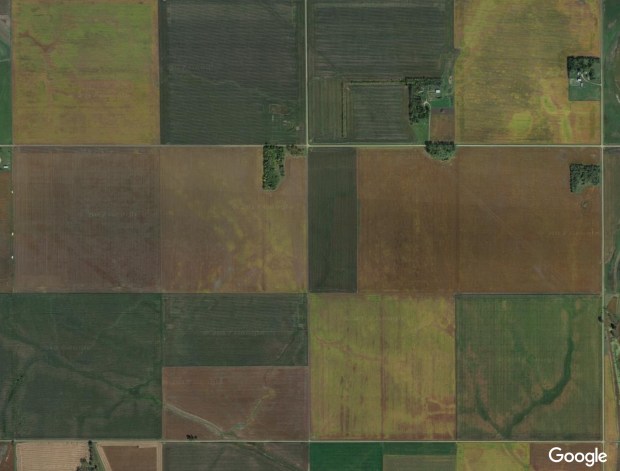
If it was up to us, we would keep our lives in “in-control” predictable boxes and rows, like Nebraska:

But if we did, we would miss out on the striking patterns and colors of His unpredictable work in our lives:

If we had the choice, we would walk on never-ending soft, straight, sandy beaches:

But those rocky, jagged twists and turns that sometimes feel like pain are His carefully sculpted artwork:

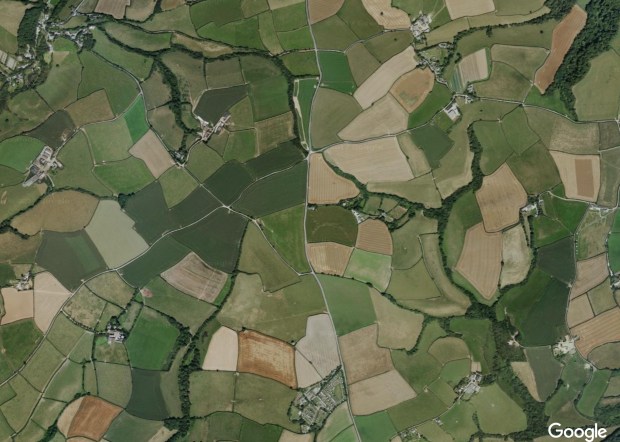
When you’re lost in a maze of fields, being rocked by waves, or struggling to maneuver along a rocky coast, it’s hard to be thankful! But zooming out by looking back over our whole lives and declaring that “His love endures forever” can bring a welcome change in perspective.

“Give thanks to the God of heaven.
His love endures forever.”
Psalm 136:26

*http://biblehub.com/interlinear/psalms/136-1.htm and http://biblehub.com/hebrew/2617.htm

Enter your email address to subscribe to this blog and receive notifications of new posts by email.

Flip-Flop

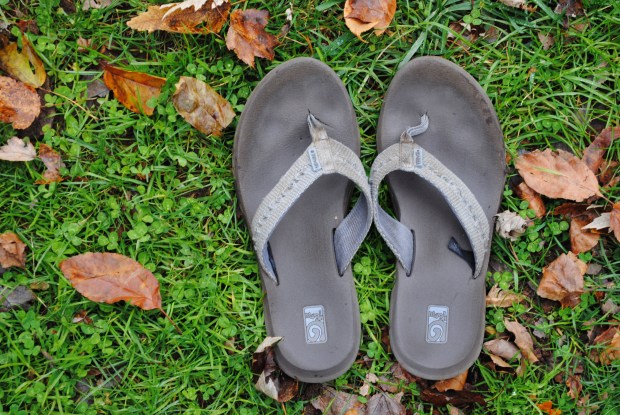
If you see the Desilets family walking around with glum faces these days it’s because of one thing: November. No, we’re not getting the lack-of-daylight blues or dreading the cold winter ahead – November for the Desilets means it’s time to put our flip-flops away 😥. We’ve stretched their convenient, comfortable, non-confining use to the last possible days – but with temperatures falling into the 30s this weekend, we must finally surrender!

Speaking of flip-flops… One day this spring I was at church, attempting to sing along in worship, but I couldn’t focus because something was bothering me. There was a sharp object jabbing into the bottom of my foot. I tried to ignore it, but every time I shifted my position (which happens often with some songs!) I would feel it again. Since I was, of course, wearing flip-flops, I tried to just shake whatever it was out, but that didn’t work. Then I took the sandal off my foot and shook it with my hand. That failed, too! What in the world?

I finally gave in, sat down, and upon closer examination, found the culprit – the sole of my flip-flop had somehow completely absorbed a small piece of wood! Ouch!

We are natural born measurers. From the first time our sibling gets the “bigger” piece of the cookie to the day we throw on our dad’s giant boots and claim to be “taller” than him, we compare and quantify our world in order to know where we stand.

Our favorite thing to gauge may be sin. Like the New Testament Pharisees, we naturally survey the behavior of others in our world and, in most cases, decide we’re doing pretty well. Since we don’t struggle with certain sins, we perceive that we must be standing on some thick, sturdy soles.

But really we’re more like flip-flops! We are soft and more vulnerable to temptation than we like to believe.

1 Corinthians 10:12-13 says, “So, if you think you are standing firm, be careful that you don’t fall! No temptation has overtaken you except what is common to mankind.” The solid shoes we perceive we’re standing on are only self-constructed stilts of our personal “sin ranking system” – we’re sure certain temptations will never trip us up, but Paul urges us to beware!

Though we see ourselves as unique, we are “common” and therefore capable of absorbing sin in all of its many forms. Because we narrowly perceive our invulnerability to be a result of our own “good choices,” we miss out on the broader picture of sin and its extensive infrastructure in our lives. Yes, some of our sin is straight-up going-our-own-way pride, but much more of it originates in weaknesses woven into our personality type and the particular pains and stresses this world has laid on us.

I’ll never forget the day my friend (who is one of the most loving and caring people I know) said to me, “I must believe that I’m just as capable of murder as the person who’s already killed someone.” A statement like this may sound shocking at first, but not accepting its truth is dangerous. I’ve seen it happen in my own life and the lives of others – the sins we judge most harshly (because don’t currently struggle with them) could, given the right combination of circumstances, easily become our struggle.

In 2 Corinthians 12:7, Paul shares that he was given a “thorn” in his flesh. We don’t know exactly what this “thorn” was (if we did we might measure ourselves ‘better’ than him), but we know it was there “in order to keep [him] from becoming conceited”. We’re flip-flops on purpose because it’s the only way we’ll learn how utterly dependent we must be on the grace we’ve been given only through Christ and the strength we are given only through His Spirit.

As I was pulling the “thorn” out of my flip-flop that Sunday, I felt around and found another one not far from it. I hadn’t noticed the second one because it hadn’t started to cause me pain yet – but it was there, ready and waiting!

The more I know Jesus, the more aware I am of how little I know myself. The more I worship Him, the more He reveals those thorns that are so absorbed into the roots of my being I can’t see them. And God is faithful, not only to provide a “way out” as the second half of 1 Corinthians 10:13 states, but also to “keep (me) from becoming conceited” by daily reminding me of my vulnerability. I may be a flip-flop, but thank God that His “power is made perfect in weakness”! (2 Corinthians 12:9)

Enter your email address to subscribe to this blog and receive notifications of new posts by email.

Warning

This summer, while driving up a winding mountain road in Vermont, I pulled over to snap a photo of the gorgeous Green Mountain view. This overlook was clearly a popular place to stop as there was plenty of space to park on one side of the road and a wooden fence on the other side, preventing people from wandering too far and tumbling down the steep slope below.

Or so I thought.

As I walked toward the sign and began to read it, I laughed out loud at my mistaken assumption:

Though the risk of falling was a legitimate concern, there was a bigger deal at hand here. To those who thought they could “handle it” and get right up to the edge, this sign warned of a less-obvious risk. I’m guessing giant hogweed and cow parsnip (?!?) aren’t something anyone wants in their near future!

Sin is a big deal. The risks of crossing the boundaries God has set in place for our relationships with Him, others, and ourselves are real. The fences are there for a reason – it just may not be the reason we first assume.

In his letter to the church at Corinth, Paul addressed several “sin” issues the church was facing. Just as we do in our culture today, the believers struggled with whether or not certain acts should be labeled as “sin”. As the founder of this church, Paul’s words carried great weight and his wisdom was right on. In two very similar verses, Paul says:

“I have the right to do anything,” you say—but not everything is beneficial. “I have the right to do anything”—but I will not be mastered by anything. (1 Corinthians 6:12)

“I have the right to do anything,” you say—but not everything is beneficial. “I have the right to do anything”—but not everything is constructive. (1 Corinthians 10:23)

Most of us, especially those who grew up under a “Because I said so…” parenting or church style, tend to think of sin only in terms of “getting caught” or in terms of the danger of the “obvious” consequences. But Paul challenges us to think differently – to look harder at the not-so-obvious consequences and then hold them up to the “life to the full” Jesus desires for His followers in John 10:10.

For example, the risks of gossip are obvious. My judgmental opinion about someone else could get back to them, hurting their feelings, and putting a rift in our relationship. But most of us – because we rarely “get caught” – continue on, not realizing that the brewing and sharing of these thoughts is a toxic weed that is slowly poisoning our souls.

In today’s world, where the boundaries have been blurred into an individually-defined “what’s sin for you might not be sin for me” pile of rubble, Paul’s principle for believers still rings true. The sacrifice of Christ means that the spiritual consequences of our sin (whether we called it sin or not) have been eliminated and we’ve been freed from living in a “getting caught” mentality.

However, that doesn’t mean we should throw caution to the wind and jump over the fence! The Spirit of God within us can help point to choices that will lead to “life to the full” in Jesus, but we also have been given brains to discern whether a choice is “beneficial” or “constructive,” so we will not end up “mastered” by anything.

In her book, “Why I Didn’t Rebel: A Twenty-Two-Year-Old Explains Why She Stayed on the Straight and Narrow – and How Your Kids Can Too,” author Rebecca Gregoire Lindenbach recalls being raised in a home where “reasons” were given priority over “rules”.* Instead of telling their children what to do, Lindenbach’s parents (age-appropriately) taught her and her sister how to make their own choices. “Something I consistently found across my interviews with kids who didn’t rebel was that none of us could really explain how we learned what was allowed. Rather, it was an ongoing conversation about right and wrong and about what was going on in that moment.” (p. 25)

After 20 years in youth ministry, I can tell you that, when raised in a “Because I said so!” environment, young people tend to evaluate their decisions based on two things: “Am I likely to get caught?” and “Are the others I see already engaging in this activity experiencing those ‘obvious’ consequences I’ve been warned about?” Since most of the time, the answer to those questions is “No,” the risk almost always seems worth taking.

But rather that telling our teens: “Sex is bad! You’ll end up with a disease or unplanned pregnancy”, we can have ongoing discussions about relational boundaries and the power of misplaced intimacy. Rather than getting on our “Don’t do drugs – they’ll fry your brain!” bullhorn, we need to help them find healthy, personality-appropriate ways to cope with stress and pain. And instead of harping on them about how “All that social media and Netflix-binging is rotting your brain,” we can provide them with opportunities to experience life outside their norm and to find a purpose outside of themselves.

One of Lindenbach’s case studies in her book is a young woman named Alexis, whose parents expected her to make good choices and consistently told her she was smart enough to do so. “’My moral judgments grew so strong,’ Alexis explained, ‘that it was no longer about not disappointing my parents but about the impact that rebellious actions would have on me and on my future. I didn’t want rebellious acts to become habits that became who I was.’” She knew her parents expectations, but came to her own understanding that, “’to do well in school, go to university, stay away from drugs and sex – it’s clear how they benefited me.’” Teaching our children how to “construct” their lives on “beneficial” choices will prevent them from exposure to those toxic weeds better than any fear-based, flashy warning signs ever will.

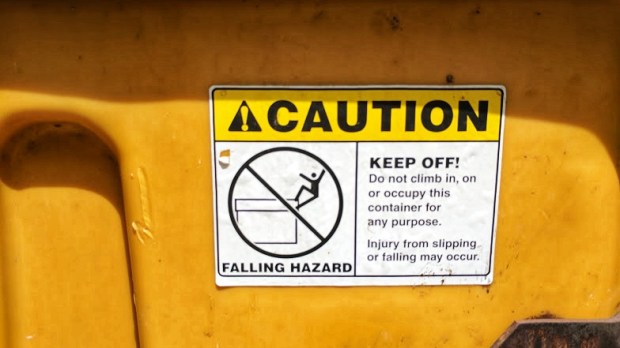
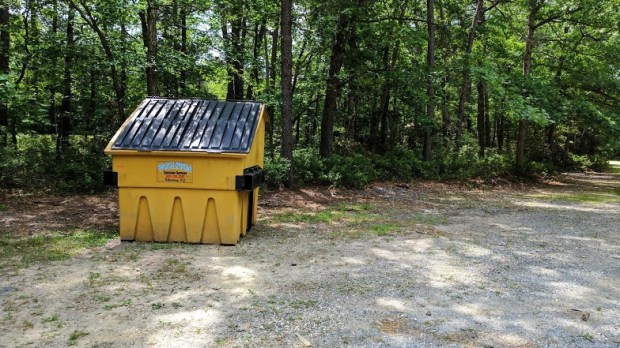
On our way out of a New Jersey State Park campground this summer, we stopped to dispose of our trash. As I walked toward the dumpster, I saw this warning sign:

Hold on a second, I thought. Why are they making a big deal about this ONE thing when there are so many other risks at play here! Hello!? What about the bacteria, diseases, and sharp objects INSIDE the container?

If all our kids see are “Don’t stand on the dumpster, you might fall off!” signs, they’ll miss out on an awareness of the much greater consequences their choices might have on their heart, mind, and relationship with Jesus. And, as adults, when we focus on the “rules,” evaluating our decisions on the basis of whether or not we’ll be “caught” or weighing only the likeliness of the “obvious” consequences, we may end up wandering on paths of poisonous plants.

Our loving Father, who sees all and knows all, has good reasons for His commands. He’s given us His Spirit as a guide, but He’s also given us intelligent minds capable of seeking out, processing, and then building our lives on His reasons!

*“Why I Didn’t Rebel: A Twenty-Two-Year-Old Explains Why She Stayed On The Straight and Narrow and How Your Kids Can Too” by Rebecca Gregoire Lindenbach, 2017

Enter your email address to subscribe to this blog and receive notifications of new posts by email.

Pet

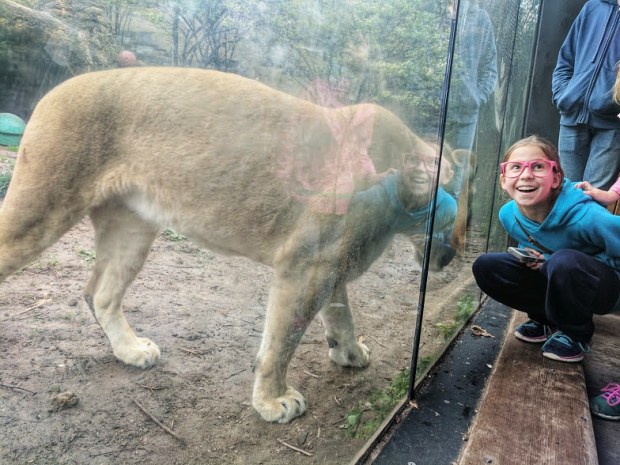
Philadelphia Zoo members know that the best time to visit the zoo is in the winter. With no crowds of tourists or school field trip groups, you’re free to visit all your favorite animal friends in peace. You might even have a close encounter with a baby gorilla or a get a “kiss” from a lion!

But there’s one exhibit that’s a little eerie in the winter: The Reptile & Amphibian House. When you’re alone in this dimly lit building, decorated with a floor-to-ceiling size stone cobra head, surrounded by creepy-crawly sharp-toothed (or poisonous) creatures, you get a little jumpy.

One day last year, after Anna and I were done “aww”-ing over the cuteness of a swimming Pig-Nosed Turtle, we turned to our right only to come face to face with this:

I swear these guys hang there, perfectly still, with their heads above the water, just waiting to catch unsuspecting turtle admirers off guard, and make them jump!

But the best part is the sign next to them that says this:

If you do the research, you’ll find that yes, there is in fact a market out there for pet Caiman. Although experts advise against bringing these dangerous reptiles into your home, many people convince themselves they are up for the challenge. As babies they may appear to be “manageable,” but the problem is that they grow – and so does their bite!

From the beginning of time, sin has been a creepy-crawly, sharp-toothed, poisonous presence in the lives of human beings. God, as the Creator of all that is seen and unseen, is the ultimate Expert – He put every system into place, so He knows how it’s all supposed to work in the best way possible!

But, even with full knowledge that we are only creations of the Creator, we get it in our heads that we know better than Him. Instead of loving and caring for each other, we put ourselves and our own agendas first. Instead of following God’s guidelines for relationships, we do what “feels right” to us. Instead of giving and sharing what we have to help others, we remain content in living “above” them. Instead of adoring God with our whole hearts, we make things and people what we desire.

Sin seems so harmless at first and we’re sure we can handle the consequences (if there even are any), so we take it in as a pet. We give it a cage to try to contain it, feed it a little here and there, and expect it to stay under our control. Unfortunately though, like Caiman, sin has a tendency to grow – and so does its bite. Before we know it, we lose control and end up hurting ourselves and others in the process.

In Romans 8:11-14, Paul writes that “the Spirit of God, who raised Jesus from the dead, lives in you. And just as God raised Christ Jesus from the dead, he will give life to your mortal bodies by this same Spirit living within you. Therefore, dear brothers and sisters, you have no obligation to do what your sinful nature urges you to do. For if you live by its dictates, you will die. But if through the power of the Spirit you put to death the deeds of your sinful nature, you will live.”

Although the spiritual consequences of my sin have been so mercifully removed from me by the sacrifice of Christ, sin still lurks at my door on a daily basis. I know I’ve been forgiven, but that doesn’t mean sin is something I want in my life – as a follower of Jesus, the last thing I want to do is cause pain in my own life or the lives of others!

In Romans 8, Paul suggests that we “put to death” the deeds of our sinful nature. In other words, it’s time to go to battle! For this battle we need more than just effort – we need a strategy. Unfortunately, most of time time we choose a weak one.

First, we try to convince ourselves about our sin. Temptation to do something we know (or at least suspect) isn’t God’s best for us presents itself and thoughts such as “It’s harmless” or “I can handle it” pop into our minds. Soon we’re engaging in dialog with these thoughts, allowing our hearts and minds to be persuaded by our own sinful hearts and minds that this is “not a big deal”.

But God has given us a much more effective strategy! As believers we have the Expert of all experts living inside of us – and one of the Holy Spirit’s main roles is to “convict” us or “convince [us] with solid, compelling evidence”* about sin. It’s only “by the power of the Spirit” that we have any hope of putting sin “to death” and we only access that power when we’re listening to His voice, engaging in dialog with Him, and letting Him be the expert!

Even when we’re convinced, though, many of us fall into a second weak strategy: We know our “pet” was a bad choice and it’s time to get rid of it, but instead of continuing to listen to the Expert, we try to overpower it on our own. We mistakenly believe that putting sin to death requires us to remain in the room with it and somehow not indulge.

But the “power of the Spirit” is not some sort of supernatural boost in willpower! The power of the Spirit is His wisdom in guiding you into better decisions so you don’t end up in the situation in the first place. The power of the Spirit involves Him drawing you to spend more time understanding His character, making Him more desirable than your sin. The power of the Spirit is accessed when you follow His leading to ask for help and accountability from other believers in your life. Having “no obligation to do what your sinful nature urges you to do” doesn’t happen in the moment of temptation – it happens in the days, weeks, months, and years before the temptation as you let the real Expert be the expert in your life.

We’ll never eliminate sin from our lives this side of heaven, but we can choose better strategies in putting it to death. Our hearts and minds are always going to try to convince us that sin is manageable, but we have Someone greater than our hearts and minds inside of us!

*http://biblehub.com/greek/1651.htm

Enter your email address to subscribe to this blog and receive notifications of new posts by email.

Imagine

I am your favorite show’s worst critic. The phrase “That’s not even possible!” rolls off my tongue regularly as I scrutinize the details of characters and scenes. I know I’m mistakenly projecting the limitations of real life onto an imaginary scenario, but sometimes I just can’t help myself!

If you had spent the entirety of your developmental years locked in a tower with the mentally unstable woman who kidnapped you, there’s no way you’d be as socially adjusted as Rapunzel was in Disney’s “Tangled”. Also, your hundred-foot-long hair would not float perfectly behind you without getting *tangled*, and you wouldn’t have known the lights appeared every year on your birthday because there’s no way your kidnapper would have told you the real date of your birthday!

I can’t watch shows like MacGyver (the new version) without wondering why 99 out of 100 bullets shot at the main characters don’t hit them, but 9 out of 10 of their shots are dead on. And when you’re not even MacGyver and you’re locked in the trunk of a moving car speeding toward your demise and there just happens to be a container of random spare parts and you just happen to know how to turn them into a working cell phone? That would never happen!

And as I’ve watched football over the past few weeks, I’ve said out loud, “Who are these imposters? This pass-completing, 3rd-down-converting, red-zone-succeeding team can’t possibly be the Philadelphia Eagles!?” 😉

My fellow television viewers may be annoyed with my lack of imagination, but what can I say? I’m a realist!

In John 6:5, Jesus asked His disciples a question that tested their imagination:

When Jesus looked up and saw a great crowd coming toward him, he said to Philip, “Where shall we buy bread for these people to eat?”

Philip’s realism was revealed in his response:

Philip answered him, “It would take more than half a year’s wages to buy enough bread for each one to have a bite!” (v. 7)

Knowing that this was an impossible request, Philip made it clear that even the best scenario he could think of would fall short.

The next to respond was Andrew, whose spark of imagination sparked a miracle:

“Here is a boy with five small barley loaves and two small fish, but how far will they go among so many?”

Andrew added a disclaimer to the end of his momentary hallucination, but for a brief second, he imagined that this small amount might feed so many!

Isaiah 55:8-9 says:

“For my thoughts are not your thoughts,
neither are your ways my ways,”
declares the Lord.
“As the heavens are higher than the earth,
so are my ways higher than your ways
and my thoughts than your thoughts.”

As human beings who have spent the entirety of our developmental years in these bodies and on this earth, it’s easy to see why our thoughts would be just that – our thoughts. These thoughts have been molded by our experiences and we naturally predict and plan based on what we comprehend to be the possibilities.

But God’s predictions and plans come from a much different source than ours – not only is He able to take into consideration factors we are unaware of, He also has full knowledge of what His out-of-this-world power is capable of. Unjaded by human disappointments and earthly limitations, He dreams bigger dreams for us than we can dream for ourselves.

As those five loaves and two fish, meant to feed one, expanded to feed thousands, Jesus wasn’t taken by surprise. He had “already had in mind what he was going to do” (v. 6) and as the disciples watched this unfold, their thoughts became “higher” as well. What had seemed outrageously impossible a few minutes ago was now becoming reality!

Yet even then, in the disciples’ minds, the greatest possible outcome was for all the people to get some food. If they had planned this themselves, they never would have dreamed that everyone would get “enough” to be satisfied and even crazier – that there would be leftovers! (v. 12) This was beyond the biggest thing their human thoughts could have imagined.

Our oldest daughter is an inventor by nature – when she’s not climbing walls, she’s dreaming up plans and creating things. Since I am a realist by nature, my challenge as a parent is to encourage this creativity instead of pointing out all the reasons I believe her ideas won’t work.

The other day she asked me, “Do you think I could make ginger cookies without the molasses and use maple syrup instead?” It didn’t sound good to me and even though I didn’t want her to end up disappointed, I held back and told her to give it a try.

And good thing I did! She found a recipe and made (and I’m not exaggerating) some of the best cookies I have ever tasted. Yum!

Recently I’ve been challenging myself to turn off the music when I’m in the car and use that time to pray for people. I struggle to pray for others – not because I don’t want to or don’t have the time – but because I get sick of praying the same old, same old. My realism invades my prayers as I repeat, “God, rescue her from this” or “Take away his pain” or “Help her come to know You” over and over again.

I can only pray based on what I know of that person’s life, and knowing that the Holy Spirit inside of me knows more than I do, I can ask Him to guide my prayers. But at the end of the day, all I have are my limited “thoughts”. And if all I have is what I can think of, why not say “Here is…” and then pray for the biggest thing I can dream up?!

So instead of praying for my friend to be rescued from a trial, I pray for her future ministry to people in that same trial. Instead of praying for his pain to be relieved, I pray for the people in his life who will come to know Jesus because his pain led him to their place. Instead of praying for a loved one to come to know Jesus, I look at their God-given interests and talents and pray for those who are going to be led to Jesus by their gifts.

When praying these prayers, I regularly shake my head and say, “I can’t even imagine that ever happening!” But I’ve learned to snap out of it and say, “Why not? Jesus can do ANYTHING!”

Will I be disappointed? Maybe. But even if I am – I’m guessing God has something even greater than I can imagine in store!

Enter your email address to subscribe to this blog and receive notifications of new posts by email.

Muddy

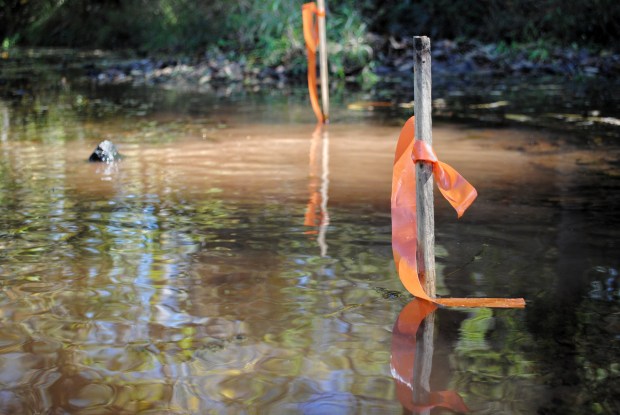
“There are two river crossings in this race, but if you follow the flags you’ll never be in more than six inches of water,” the race official announced through her megaphone. For a brief moment, I wondered what in the world I had gotten myself into! But as the race kicked off, I could barely contain my excitement. This was my first official “trail race” since my high school cross country days (in Vermont everything was a trail race) and I was ready for 10 miles of adventure!

Upon reaching the first river crossing about 5 miles in, I noticed the people in the water ahead of me were walking very slowly. I wondered why, as this was after all, a race, and the water wasn’t that deep!

As soon as I stepped into the water, though, I found out why: Not only were there lots of loose, unpredictable rocks along the marked route, but all the race traffic had caused the view of these rocks to be completely clouded with mud! Normally, when you’re walking through a stream you can get a rough perception of where your foot is about to land, but in this case, there was no way to tell. Your only option was to have faith that by following the flags you weren’t going to end up soaked!

One of my favorite moments in the Bible is when Joshua and the people of Israel cross the Jordan River, for the first time entering en masse into the Promised Land (Joshua 3). After 40 years of waiting and wandering, God’s guidance to “go” was clear and made even clearer by His promise to miraculously hold back the water so the people could cross on dry land.

But for the priests who were carrying the ark at the front of the line, those first steps must have been uneasy. Joshua 3:15 tells us that the Jordan was “at flood stage” that day – meaning this river was full and moving fast. There was no six-inch-deep path marked out for them and no guarantee that the rushing waters would stop. These steps of faith required them to put their feet down into the unknown at great risk – they were carrying an incredibly valuable possession!

There are so many moments in my days where I wish God’s guidance for me was clearer. If only He would show me exactly what He wants me to do – rather than leave me wondering if the nudge I’m sensing to talk to that person or say yes to that opportunity is all in my head. But recently I’ve been learning that faith isn’t taking a step because the water is clear – faith is taking the step even if it’s not. There are times where, like the Israelite priests, those first steps will lead to a supernatural clearing of the way in front of me, but it’s more likely that every step of obedience is going to be at least a little murky.

As ministry leaders, Tim and I live in constant dependence on the path-marking “flags” of God’s Spirit. This fall, after months of sensing His lead, we made a major shift in the way we do high school small groups. Even though we weren’t 100% sure, we took the risky step of announcing the changes. There were lots of shaky rocks and potential plunges as we reassigned leaders and students to their new groups – but we kept moving. A few weeks later, it was time for a re-shuffle (part of the big change we’ve made) and guess what? The water is still muddy! These are hard decisions, but if we waited until we were 100% sure, we would never move.

About halfway through my first river crossing of the race last Sunday, I got fed up with the murk (and resulting slow pace) of the muddy water and thought, “Surely, this will go faster if I just head over there where I can see the bottom clearly.” I veered a few steps to the left and – you guessed it – ended up taking a waist deep detour I almost had to swim my way out of!

In an instant-gratification obsessed society, it’s hard to wait on the Spirit’s leading and even harder to obey when we don’t see clear, gratifying results. We like the idea of sensing His direction on a regular basis, but it takes more time, practice, and ongoing risk than we’re normally willing to put up with. It’s so tempting to resort to our own ‘common sense’ and take what looks like the easy way around!

He’s got the course marked, but that doesn’t mean it’s not going to be muddy. Those nudges I get throughout the day or the things I know I’m called to do because they are clear in His Word are there – the question is, am I willing to obey, even if I’m not sure?

Enter your email address to subscribe to this blog and receive notifications of new posts by email.

Tension

From the first episode we watched, our family has been obsessed with “American Ninja Warrior”. This action-packed obstacle-course competition challenges athletes’ agility and strength – especially their upper-body and grip strength.

Our children, desiring to follow in the footsteps of newfound heroes like Jessie Graff and Meagan Martin, could be confused with monkeys based on the large amounts of time they spend “hanging” out on the obstacles in our backyard. Having small bodies that haven’t proportionally caught up to their arm muscle limits yet, they make a row of monkey bars or a trip across the “ninja line” look like a breeze!

Knowing we have no chance of keeping up with our kids, Tim and I have begun issuing each other daily “ninja challenges” – the first of which was to hang (yes, just hang) from the ninja line for 10 seconds (yes, just 10 seconds). It sounds easy, but hanging from this slackline is no simple feat!

And that’s because there’s too much slack. This line is adjusted to hold up our children, but our adult weight and height require us to work that much harder to stay off the ground. There’s not enough tension to hold us up!

It turns out a little tension can be a good thing.

A relationship is defined as the connecting line between two things and the relationship between God and human beings has a long history of tension. Most of the time, we think of this as a bad thing because, after all, tension = tense = stress = bad. And as Christians, we expect our connection with God to be good, not bad! But since He’s God and we’re not, some level of tension is always going to be present.

Here’s how it happens:

Many of us grew up learning Sunday School truths about a God who is mighty and powerful and who uses that power to do supernatural things to help people. We hear stories about His great love for us and His plans to guide us, care for us, and meet our needs. Even those of us who came to know Him as an adult, get a “WOW!” first impression of this God.

But inevitably there comes a point where these truths don’t seem to be holding up. That supernatural power didn’t show up when you needed it. The “love” and “care” you’re supposed to be experiencing is noticeably absent. Instead of guidance, you hear silence.

The Bible is filled with examples of this tension:

Why do you say, O Jacob,
and speak, O Israel,
“My way is hidden from the Lord,
and my right is disregarded by my God”?
Isaiah 40:27

Out of the depths I cry to you, O Lord!
O Lord, hear my voice!
Let your ears be attentive
to the voice of my pleas for mercy!
Psalm 130:1-2

Why have you wounded us past all hope of healing?
We hoped for peace, but no peace came.
We hoped for a time of healing, but found only terror.
Jeremiah 14:19

These cries echo our own experience today. We look around at our world, our circumstances, and our struggles and wonder: “If You really are ‘in control’, why aren’t You fixing this?” or “If You’re as ‘good’ as you claim to be, why aren’t You showing it?” The tension mounts as we attempt to reconcile who we believe God to be with what we’re seeing of Him in real life.

If you read on a bit further in these passages, you’ll find that they all end in the same way:

Can any of the worthless foreign gods send us rain?
Does it fall from the sky by itself?
No, you are the one, O Lord our God!
Only you can do such things.
So we will wait for you to help us.
Jeremiah 14:22

I wait for the Lord, my soul waits,
and in his word I hope;
my soul waits for the Lord
more than watchmen for the morning,
more than watchmen for the morning.
Psalm 130:5-6

Even youths shall faint and be weary,
and young men shall fall exhausted;
but they who wait for the Lord shall renew their strength;
they shall mount up with wings like eagles;
they shall run and not be weary;
they shall walk and not faint.
Isaiah 40:30-31

The Hebrew word for “wait” in these passages means more than the “passing of time” we might think of. It’s rooted in the idea of “twisting” or “stretching” and describes the “tension of enduring, waiting”*. Waiting on the Lord means to remain in the tension – to stay in that place of discomfort and disagreement in your relationship with Him. Because it turns out too much slack is actually the problem.

Slack in our relationship with God happens when we avoid the tension. It develops as we start dismissing the things about God we don’t like or that don’t make sense to us, forming our own “comfortable” view of Him. It grows as we close our eyes to the world around us and sprinkle a spiritual sugar-coating of “God is good” on the situations we don’t want to accept. It may feel good for a time, but if that relational line between you and God has too much slack, it’s not gonna hold you up!

Today’s “ninja challenge” involved setting up a slackline (the kind you walk on like a tightrope) in a local park and standing on it for 10 seconds (yes, only 10 seconds – it’s much harder than it looks!). After several very wobbly attempts, we finally cranked up the tension. A couple tries later and an 11-second victory was mine!

If you’re feeling comfortable in your relationship with God, that may be a red flag that it’s time to up the tension. Maybe you need to open your eyes to the events going on in our world, find a mentor, and start asking some hard questions. Maybe turning the crank looks like opening your Bible and studying some of those passages you’ve avoided because they don’t fit with your theology. Maybe it looks like opening up to a trusted friend about your doubts. Or maybe it means you stop sugar-coating and get brutally out-loud honest with God about a situation in your life.

Tension in my relationship with God may not feel good, but it is good. It’s in the tension that I am pushed to learn things about Him that I otherwise wouldn’t have paid attention to. It’s in the tension where I allow Him to put His finger on the nerves, revealing areas of my life I need Him to do some work on. It’s in the tension that I start seeing faith as a choice to put my life in God’s hands even if He doesn’t come through in the way I expect Him to. Embracing the tension may seem counterintuitive, but it’s in the “waiting” that He holds me up!

*http://biblehub.com/hebrew/6960.htm

Enter your email address to subscribe to this blog and receive notifications of new posts by email.

Hydrate

13.1 miles is a lot of miles. So when my friend Maddie asked me if I was running the Rock ‘n’ Roll Half Marathon this fall, I laughed. Having never run more than 9 and never raced more than 5, the thought of even signing up for this race made me sweat!

I gave in, though (Maddie can be very convincing! “It’ll be FUN,” she said 😉) and the training commenced. Beginning with 4 and 5-mile “long” runs in May, we gradually added on miles, hoping to reach 13 by mid-September.

One day, after running 6 miles in 90-degree heat (and being sure I could never.go.any.further), I got on my phone and ordered one of those little hand-size water bottles I’d seen ‘real’ distance runners carry. If I was going to do this, I could never run that long without water again.

And it worked – my 7, 8, and 9-mile runs were much more bearable when I was hydrating along the way!

HYDRATE (2)-01

In John 4, Jesus encountered a woman who knew something about thirst. First of all, he met her while she was collecting water at a well, but further, while most women would have made the trek in the cool of the morning or evening, she was there in the heat of midday. And when Jesus, stepping outside the social boundaries of His time, asked her for a drink, she revealed a deeper thirst – a thirst for truth:

The Samaritan woman said to him, “You are a Jew and I am a Samaritan woman. How can you ask me for a drink?” (For Jews do not associate with Samaritans.) (v. 9)

Jesus, knowing that He Himself was the gratification of this thirst (see John 14:6), replied:

“If you knew the gift of God and who it is that asks you for a drink, you would have asked him and he would have given you living water.” (v. 10)

Confused (and probably frustrated that He didn’t seem to answer her question), the woman continued to question Jesus – in the end revealing an even deeper thirst – a thirst for unconditional love:

He told her, “Go, call your husband and come back.”
“I have no husband,” she replied.
Jesus said to her, “You are right when you say you have no husband. The fact is, you have had five husbands, and the man you now have is not your husband. What you have just said is quite true.” (v. 16-18)

As the conversation progressed, Jesus patiently and deliberately exposed her thirst – not to shame her – but to show her how desperately she needed His “living water”. Though the water from this well was sacred to Samaritans (see v. 12), it was only a cistern of standing, temporarily-refreshing liquid. But what Jesus had to offer was the constantly flowing “bubbling up, gushing forth”* stream of His life-giving Spirit.

I love the innocence of the woman’s response to Jesus’ offer:

The woman said to him, “Sir, give me this water so that I won’t get thirsty and have to keep coming here to draw water.” (v. 15)

We chuckle at her misunderstanding, but maybe she was on to something. Her thirst had led her to this place – both physically and spiritually – and the thought of being free from this daily chore was appealing! She just didn’t (yet) have the eyes to see that Jesus was freeing her from the greater chore of trekking to “wells” that would satisfy her desire for truth and love.

Life with Jesus is a marathon and the gulps of water you take at weekly visits to the well (or from other sources) aren’t going to keep you hydrated for the long-haul. God has given us the gift of His Spirit, whose constant flow is constantly available to us. Like my running bottle, He’s always right there and little effort is required to access His “living water”. Every time we simply engage in communication with Him by acknowledging His presence and submitting our need to Him, we are taking another hydrating sip!

HYDRATE (1)-01

I was feeling confident the day Maddie and I began our 10-mile practice run a few weeks ago. Water in hand, I was ready to accomplish this milestone distance! But my small sips were not enough and when the nice lady in my phone finally told us we had reached our goal, I almost fell to the ground. I felt completely wasted – I couldn’t go another step, let alone another mile – let alone another 3.1 miles!

I learned my lesson, though, and the next time I ran, I drank a full bottle of water beforehand and still carried the small bottle with me. I felt much better at the end of that run and went into race day knowing what I needed to do.

Unfortunately, my strategy backfired. In my pre-race anxiety I drank two full bottles and then had to deal with the *consequences* of my actions. Five miles into the race I couldn’t take it anymore and had to make the dreaded port-a-potty stop, which was not only disgusting, but also a total a waste of my valuable time!

Our bodies need more water than we think – and if we want our relationship with Jesus to be “living,” we need more communication with Him than we think!

This week I’ve had way too much to do and not enough time to do it. So this morning, I opened up my Bible, read through the passage I’ve been studying, closed it, checked “time with Jesus” off my list, and got ready to move on to the next task.

But as I started to stand up, I felt a very clear nudge to pause (part of which may have been that the six-year-old on my lap was working on a ‘very important’ coloring project and couldn’t possibly move) and pray. It occurred to me that I had read and studied God’s words, but that didn’t mean I had engaged in communication with Him. At first it felt like a waste of time, but it turned out to be exactly what I needed!

Not a single ounce of your communication with Jesus is ever wasted – you can’t over-hydrate your relationship with Him. In fact, if you’re not receiving hydration from Him throughout the day, it’s likely that what’s being wasted is time spent trekking around to other wells looking for something to satisfy your thirst. But gallons of truth and unconditional love are just a prayer away!

How’s your “hydration” level today?

*http://biblehub.com/greek/2198.htm

Enter your email address to subscribe to this blog and receive notifications of new posts by email.

See

The camera may be my favorite invention ever. Having the ability to capture what I see in front of me and share it with others is revolutionary. As a mom and adventure-junkie, my photos are my most treasured material possession! I never have to worry about forgetting those smiling faces, panoramic views, and milestone moments.

But no matter how good my high-tech DSLR or the latest-greatest smartphone cameras claim to be, the images always seem to fall short. Whether it’s inaccurate coloring, distorted faces, or warped perspectives, I’m always disappointed – because what my eyes saw was so much better! And even if it looks spectacular on my screen, it may look totally lame on yours 😕

SEE-02

In John 3, a Pharisee named Nicodemus “came to Jesus at night and said, ‘Rabbi, we know that you are a teacher who has come from God. For no one could perform the signs you are doing if God were not with him.'” (v. 1-2) While most Pharisees would have publicly criticized Jesus during the day, Nicodemus’ curiosity led him to have a private discussion with Him at night. And he began the conversation by letting Jesus know what he had seen – signs and wonders that were out of this world.

But “Jesus replied, ‘Very truly I tell you, no one can see the kingdom of God unless they are born again.'” (v. 3)

To the Pharisees, the “kingdom of God” (His present, active influence and rule on this earth) was seen through physical eyes – it was measured in capture-able acts of outward obedience to laws and regulations. Jesus’ signs seemed (at least to Nicodemus) to be visible evidence of more of God’s work. But Jesus wanted him to know that what he saw with his physical eyes was nothing compared to what he would perceive if he looked through the eyes of belief. Though Nicodemus thought he was seeing God’s work, it turned out he was only viewing snapshots of it!

As physical humans living in a physical world, we put a lot of stake in the things we see, hear, taste, smell, and touch. If we experience something in one or more of these ways, it becomes real to us. When it comes to spiritual things, we long for those senses to be our evidence of God’s presence – if we can see, hear, taste, smell, or touch, then we can believe He’s real and really working!

But, as Jesus informed Nicodemus, the opposite is true – we don’t believe because we see, we see because we believe. Belief doesn’t happen as a result of evidence, the evidence is only visible as a result of the belief. Though we may see apparent glimpses of a spiritual world, the only way we can truly perceive God’s work is if we are “born of water and the Spirit” (v. 5). Your sin, in its self-interest and resulting shame, must be washed away so it no longer blurs your lens and distorts your view, and the Spirit of God Himself must then renew and regenerate you with His presence – giving you new eyes to truly see.

This summer our family had the incredible opportunity of viewing the solar eclipse from inside the path of totality. As we prepared for the event, I readied my cameras and studied up on how to best capture the moment – there were so many people who couldn’t be there and I wanted them to be able to experience it, too!

The moment was spectacular, but I’m sorry to report that I don’t have much to share. I tried using video to record the daytime becoming dark, but my camera automatically adjusted and added backlighting. I couldn’t seem to find the appropriate DSLR settings to represent how eerie the sun’s dimming light was. And I had no telephoto lens to capture the actual event of the moon blocking the sun – which means you’ll just have to experience the next one for yourself in April 2024!

Screenshot_20170821-144745

The Greek word for “see” in John 3:3 means much more than to view with the eyes, it means to “experience” or “to become a partaker of”.* Notice how Jesus first used “see” but then in verse 5 clarified by saying no one could “enter” the kingdom of God unless they were born again. The “snapshots” Nicodemus had seen could never depict the depth and dimension of the Holy Spirit’s uncapture-able (see v. 8) work – it could only be experienced in person!

If you’re reading this, I’m guessing you’ve been “born again” because you’ve received and believed the truth about Jesus – that He was God in human flesh, that He gave His life as a sacrifice, and that He rose again to rule His Kingdom in victory. Although many times we think of this “kingdom” merely as our eternal home in Heaven, the “kingdom of God” is something we are given the opportunity to perceive and partake in now.

As author Brennan Manning states, “A fleeting, incomplete glimpse of God’s back – the obscure yet real, penetrating, and transforming experience of His incomparable glory – awakens a dormant trust. Something is afoot in the universe; Someone filled with transcendent brightness, wisdom, ingenuity, and power and goodness is about. In the face of overwhelming evidence to the contrary, somewhere deep down a Voice whispers, ‘All is well, and all will be well.'” (“Ruthless Trust” p. 65)

My belief in Jesus determines not only my future in God’s eternal kingdom, but my experience of it today. The visible evidence may be lacking, but if I, in any given moment, acknowledge that He is good, that He is love, that He is present and working, and that He is over and above all things, then I will “see” His Kingdom. It’s not a magic formula, it’s the trust that opens my eyes. This kind of trust sees coincidences as divine appointments, watches and waits for hard hearts to become soft, and crops discouragement right out of the picture. “Jesus moments” are all around us if we have the eyes to see them!

*http://biblehub.com/greek/3708.htm

Enter your email address to subscribe to this blog and receive notifications of new posts by email.