Foothold

Elevation is in our genes. Not only do Tim and I find our favorite places at the tops of mountains, but our children are equally obsessed with getting to the top! From the time they could walk, these girls have been climbing anything and everything they can get their hands and feet on.

This spring, our oldest daughter, Ada, joined a youth climbing team at the local rock gym. Two afternoons a week she gets to climb her little heart out, moving from handhold to foothold, foothold to handhold as she ascends an assortment of vertical (and more-than-vertical) walls.

Last week, while watching her attempt a new bouldering (that’s climbing without a harness – but don’t worry, it’s on a shorter wall) route, I noticed her struggling to get to the top. Though she had successfully grasped the handholds above the overhang (yikes!), her body simply wasn’t long enough to gain a foothold within that route that would allow her to reach any higher.

IMG_20180424_160507_490-01

When we think of climbing, we think mostly of people using their hands to ascend the side of a mountain, but equally as important as the hands are the feet. Finding a ledge or crack that at least a portion of your foot can occupy is necessary, not only to give your tired arms a break, but to give you the leverage you need to boost your body higher.

Though I’m sure this is not the exact meaning of the “foothold” referred to in Ephesians 4:27, I think it still gives us an idea of what Paul was talking about.

Anger is a fundamental human emotion. When someone does something that threatens us or threatens someone we care about, our blood pressure rises and our bodies become tense. Filled with emotion, we are spurred on to fight injustice and protect ourselves and others.

And though it can in some ways be beneficial, Paul urged those who were being “made new” by the Holy Spirit (4:23) to be careful with their anger. “‘In your anger do not sin’: Do not let the sun go down while you are still angry, and do not give the devil a foothold.” (4:26-27) Since most of our anger is only the result of our egos being threatened, Paul knew it had the potential to tear down the body of Christ.

The word translated as “foothold” in this verse is the Greek “topos” which means “an inhabited place” and, in a military sense, more territory.* With more territory comes more “opportunity,” as the ESV translates it, for power and influence. The more ‘inhabitable space’ we give to the devil, the more ‘opportunity’ he has to create hurt and division in our families, churches, and communities.
2018-04-24_08-01-37-01

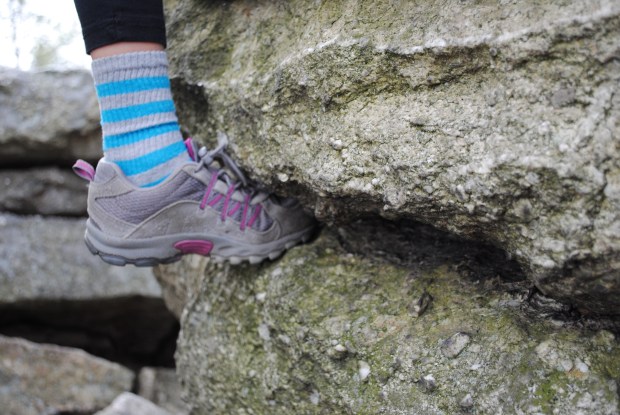
When climbing outside of the manufactured holds found in the gym, climbers take advantage of every indentation, protrusion, ridge, and crack real rocks have to offer. Over time, erosion has enlarged these ‘inhabitable spaces’ that give climbers the ‘opportunities’ they need to expand their ‘territory’ by climbing higher.

Since Adam and Eve’s first bite, elevation – of ourselves – has been in our genes. In his commentary on Ephesians 4, Albert Barnes states that: “The heart is deceitful; and seldom more deceitful in any case than when a man is attempting to vindicate himself from injuries done to his person and reputation.”**

When our egos are wounded, our tendency is to dwell on the situation. It baffles me that I can let the few seconds it took for someone to say something that offended me consume the other tens of thousands of seconds left in that day – or the following days! But the more I rehash what they said or did, trying to diagnose their sin and convince myself of their error, the more ‘inhabitable space’ I create. Dwelling is the erosion the enemy uses to carve out bitterness and resentment, which give him ‘opportunity’ in my life and relationships.

But as a follower of Jesus, I’m the one with the opportunity! Every time I want to vindicate myself, but choose to elevate Him instead, I leverage His power and grace. Every time I say, “I’m hurt, but Jesus, I will trust You with this,” I take the territory back. Every time I cut short the erosion process by saying, “Jesus, I surrender my reputation to You,” I shrink the devil’s inhabitable space. Every time I choose to “not let the sun go down” by having a hard conversation, apologizing, or offering forgiveness, I fill in the footholds – with my own two feet.

Anger is unavoidable, but the Holy Spirit is at work, empowering us to be careful with it!

*http://biblehub.com/greek/5117.htm
**http://biblehub.com/commentaries/ephesians/4-27.htm

Enter your email address to subscribe to this blog and receive notifications of new posts by email.

Weird

Pepperoni. Sausage. Peppers. Onions. Mushrooms. Bacon. Pineapple. Extra cheese, please!

Black olives. Broccoli. Artichokes. Spinach. Jalapeños. Avocado. Anchovies?

What do you like on your pizza?

In our family, pizza gets complicated. We’ve got two who will only eat plain cheese, one who hesitantly adds some pepperoni, one who sticks to the basics of “meat lovers,” mushrooms and onions, and one who wants to add as much “flavor” as possible. Pizza night for the Desilets is a make-your-own endeavor – and no complaining if one of my artichokes happens to “contaminate” your piece of the pie!

Taste is a weird thing. Though at its core all pizza is the same – crust, sauce, and cheese – what we do after that to make it our “own” can get a little crazy. If you ever want to see how different human taste buds can be, set up a pizza bar and watch people go. And then watch everyone turn up their noses at everyone else’s choices!

WEIRD

Loving people is hard. Because people are weird. If everyone would just start being “normal” (a.k.a. do things the way I think they should be done, see everything the way I see it, and like all the things I like) we wouldn’t have this problem, right? 😉 If I’ve learned anything in my 40 years of life, I’ve learned that “normal” doesn’t exist. Even the people we think are the most “like” us at first end up leaving us scratching our heads in confusion!

In the book of Romans, Paul challenges believers to allow the love of Christ to transform them from “insolent, haughty, boastful,…foolish, faithless, heartless, ruthless” worshipers of people and things (1:23, 30-31) to “genuine”, “devoted”, “honor[ing]”, “joyful”, “patient”, “faithful”, “shar[ing]”, “bless[ing]”, “peace[ful]” worshipers of God (12:9-17 ESV/NIV). If God’s most important command is to love Him and love others, then we are being transformed (12:2) to do just that.

How interesting that all those things on the first list – all things that hurt other people – stem from our worship of people. When we place a human, or even the image of a human, on a pedestal, the result is pain. Feeling let down by their lack of ability to be what we had hoped they would be, we turn against them. Without God as our God, we expect to get from others what only He can give – and when our desires are left unfulfilled, we turn inward and take, take, take, which is the opposite of love.

But as believers, filled by the Holy Spirit with the love of Christ (5:5) and a “renewed” mind (12:2), we are free to worship God alone. We don’t expect anything from anyone because we already have more than everything we’ll ever need in Christ. And we can take people off their pedestal and stop expecting them to be “normal” (a.k.a. do things the way I think they should be done, see everything the way I see it, and like all the things I like), which frees us to love them.

When Tim and I met, we believed we were a “match made in Heaven”. We had so much in common and were each so happy to finally find someone who was “normal” (a.k.a. did things the way we thought they should be done, saw everything the way we saw it, and liked all the things we liked).

But a few years into marriage, the pedestals came tumbling down when we realized how different we really were! We thought we were basically the same person, but it turns out we have very different ideas about everything from how much light is needed in a room at any given time of day, the “best” way to get from point A to point B, the definition of “on time,” the prioritization of household projects, how “free time” should be spent, what “listening” looks like, and how “disagreements” should be handled. The more I get to know my husband the more weird he becomes!

The key to loving people, as Paul points out in Romans 12:3, is to think of ourselves and others with “sober judgment”. Forming a “balanced” and “God-controlled perspective [that] blends the extremities of truth on both sides of a matter”* means accepting that I am not the baseline by which all others should be judged. It means accepting that I’m just as weird as everyone else. Yes, I may even be weirder than my husband!

When Jesus walked this planet He was able to genuinely love every person He came in contact with because He didn’t worship any of them. He didn’t put any human on a pedestal and as the Creator-in-the-flesh, He was able to see through all the “weird” to the true baseline of “normal”: He saw every person He encountered as simply a human being created by God and loved by God.

WEIRD 2

At our core, we’re all cheese pizza – we are all human beings created by God and loved by God. But after that things start to get weird! We all have different personalities, tastes, styles, opinions, responses, and methods of doing things and expecting any person to be “normal” is a fast track to putting them on a pedestal and thereby causing pain.

“Sober judgment” of ourselves paves the way for love to “be genuine” (12:9). When God takes up all the room on our pedestals, living “peaceably with all” is possible (12:18). This love thing is hard, but when I, charged up by the Holy Spirit, see myself and every person I make eye contact with as created by God and loved by God, it’s much less weird!

But really, what do you like on your pizza? Leave a comment!

*http://biblehub.com/greek/4993.htm

Enter your email address to subscribe to this blog and receive notifications of new posts by email.

Unload

Spring cleaning kicked off early for the Desilets this year. Maybe we were just motivated or maybe it was because all this snow and cold weather left us with nothing else to do (*ding ding ding*), but this past Saturday we brought our fourth carful of bags and boxes to GreenDrop. In the process we’ve reclaimed three rooms, four closets, and our sanity!

It’s crazy how “stuff” builds up over the years, especially when you have kids. Toys, trinkets, clothing, shoes, ‘accessories,’ craft supplies, books, devices, equipment, and decorative or sentimental items are all a part of life, but they seem to multiply and accumulate of their own accord. Letting go of this “stuff” is hard because there are always toys they might still want to play with, clothes you might wear again, books you really are going to read at some point, and gadgets that will surely come in handy someday.

Unfortunately, as the stuff we accumulate multiplies, so does its domain in our houses and our hearts. We hold on to it because we think it’s going to help us, but it ends up weighing on us instead. Our collected stuff has a tendency to overwhelm us by creating chaos, increased frustration, and extra work as we try to manage it all. An overload of stuff makes us feel crowded and prevents us from using our space for what it was created for.

UNLOAD (2)-01

In John 3, when Nicodemus came to meet with Jesus, he was looking for answers. Jesus had been stirring up lots of attention with supernatural “signs,” leading people – especially the religious leaders – wondering where He was getting His power from (John 3:2). But Jesus’ response to Nicodemus’ inquiry only left him confused. Using figurative language, Jesus said, “unless one is born again he cannot see the kingdom of God” (3:3). Then, when Jesus replied Nicodemus’ confusion with even more figurative language, “unless one is born of water and the Spirit, he cannot enter the kingdom of God” (3:5), he marveled, “How can these things be?” (3:9)

Carrying our 2,000-years-of-Christian-heritage baggage, we get a little judgy of Nicodemus. How could he not get it? But because of his Pharisee-and-ruler-of-the-Jews baggage, Nicodemus only associated ‘spiritual rebirth’ with the conversion of a non-Jew to Judaism. Why would someone who’s already a Jew, someone who’s already a part of God’s kingdom by physical birth, especially a leader of the Jews as he was, need this conversion? And when Jesus spoke of water, referring to baptism, this frustrated him even more as baptism was part of the conversion process. Again – why would someone who’s already a Jew need to participate in this “baptism of repentance” (Mark 1:4)?

As usual, it turns out that Jesus knew something Nicodemus didn’t know – that before we could experience the fullness of His Kingdom, we’d need to do some unloading first. It turns out material things aren’t the only things we accumulate – as we walk through life, our experiences, opinions, struggles, and sin tend to pile up and being “born again” with “repentance” represented a purging of the past in order to make space for Jesus.

Each of the four loads of “stuff” we’ve unloaded since January has contained at least one bag of my own clothing. Though I’m not a huge shopper, I do tend to hold on to things “just in case”. After the initial purge, I thought I had gotten it all, but the removal of that load only gave me the ability to see more that could go. And the same for the next load, and the next one, and the next one. I’m already filling the bag for round number five!

Though most of us can point to a moment we were “born again” as we “repented” and “entered” Jesus’ kingdom, it’s never a one-time gig. This initial unloading is only the beginning of the lifelong process of transformation, and every time we open wide our hearts in confession of sin or realization of a bias, we allow God to point out even more there is to get rid of. Every time I think I’m must have gotten it all, I find another way I’ve “conformed to the patterns of this world”. And every time I unload this “stuff” by acknowledging it to Him, I allow “the renewal of [my] mind” to continue. (Romans 12:2)

UNLOAD (1)-01

If you’re planning on visiting us anytime soon, you’ll be happy to know that our “guest room” is now an actual guest room. With all that unnecessary stuff removed, it can finally fulfill its purpose of giving you a place to stay!

According to Minimalism experts Joshua Fields Millburn and Ryan Nicodemus, unloading our stuff isn’t about “having less, less, less; rather, we focus on making room for more: more time, more passion, more experiences, more growth, more contribution, more contentment. More freedom. Clearing the clutter from life’s path helps us make that room.”

I think Christianity gets a bad rap sometimes because people think we focus too much on “sin” and “wrong,” but repentance is not about calling yourself a bad person or embarking on a constant search for the negative. It’s quite the opposite – by ridding ourselves of the junk we’re carrying, we’re eliminating frustration and chaos and allowing the space in our minds to be used for what it was created for: communication and relationship with Jesus.

It’s time for some ‘spring cleaning’!

What’s been cluttering up the space in your heart and mind lately?

What sin have you been attempting to manage (or just reorganize) that you could release to Jesus today?

What experiences and biases have you accumulated that may be influencing what God has to say to you?

*https://www.theminimalists.com/about/

Enter your email address to subscribe to this blog and receive notifications of new posts by email.

Charge

To say we’ve become dependent on technology is an understatement. On the rare day I leave the house without my phone, I feel paralyzed. What if I miss something on my calendar? What if I get an important message? If my family needs me, how will they get in touch with me? And the particularly stressful: What if I need to know something and I can’t Google it?

But even worse is when I leave the house with my phone, headed to a long event, and up pops the “low battery” notification 😲. To have my phone in my hand but be unable to use it for what I want to use it for is torture!

As much as we are dependent on our devices, our devices are dependent on power. Without power, our screens go black and we are disconnected from our world. And though batteries have increased in capacity so has our capacity to draw on them. It’s a rare day that my phone’s overnight charge lasts until I plug it back in at night!

CHARGING (2)

Easter seemed to sneak up on me this year. Amidst the snow days, a ‘spring’ (😂) break trip to Vermont, and my husband traveling to Haiti, my personal spiritual preparation fell to the wayside and I walked into church Sunday morning feeling like my battery was drained. My introverted-self had been severely over-peopled, and no matter how much I love those people, I had nothing left to give.

Thousands of years ago, the God of Israel gave his people a command to love. Not only were they to love Him with all of their heart, soul, and strength, but they were also to love others. Obedience to this command would set Israel apart from the nations around them and be a foundation that would lead them to thrive as a people.

But as we read their story in the Old Testament, we see that they just couldn’t do it. They had their moments – where their hearts were toward the Lord and the Lord alone and where people were cared for in the way He intended. Overall, though, humans – even these specially chosen and blessed humans – appeared to be powerless in making “love” a consistent reality.

When Jesus came, He continued to reinforce this same command. The majority of His recorded words all point to the importance of loving God and others, and how this love would define the new Kingdom He was ushering in. But this time things would be different as He would send a “Helper,” the Holy Spirit to give His people the power to do it. (John 14:26)

I’m old enough to remember that ancient time when our ‘screens’ needed to be connected via power cord to a wall outlet in order to function. And I remember when the battery-powered “laptop” computer showed up and revolutionized our lives! Our powered screens – and all the abilities they gave us – could now go with us wherever we went.

After His resurrection, Jesus said this to His disciples: “But you will receive power when the Holy Spirit comes on you; and you will be my witnesses in Jerusalem, and in all Judea and Samaria, and to the ends of the earth.” (Acts 1:8) This power wasn’t just a boost of motivational momentum, it was, in the Greek, “dunamis” which means “ability to perform,” and in this context, the ability to perform “through God’s ability”.* Though before Jesus’ death and resurrection, the Holy Spirit only gave certain abilities to certain people at certain times, this power would now be available to all believers at all times.

Loving God is hard. There’s never been a time when I ‘couldn’t stop thinking about Him’ and there are plenty of times every day where I place my affections on other things. And loving people? Even if they consistently acted according to my will and never did anything to hurt or offend me, it would still be a struggle. There are many days I feel like a disconnected black screen – I don’t even have the desire to love God or people, let alone the power!

But as Philippians 2:13 says, “God is working in you, giving you the desire and the power to do what pleases him.” I was never meant to love with my own power. I was meant to depend completely on the “dunamis” of the Holy Spirit, which is constantly available to me. Jesus’ resurrection allows me to charge up with endless currents of His unfailing love, which is far greater than anything I could ever muster up!

CHARGING (1)-01

I’m also old enough to remember that ancient time when you had to plug your phone into a wall outlet to charge it. Yes, my phone’s charge rarely lasts a full day, but I never have to worry about that because, thanks to my handy-dandy charging block, I can recharge wherever I go.

Charging up on the love of Jesus through the Holy Spirit once a week (as I attempted last week) or even once a day is not enough – the demand and draw of loving people drains our batteries much faster than that. But setting my mind on the Spirit by praying, listening to worship music, mentally reciting memorized Scripture, or just simply asking Him for help recharges my heart to love!

*http://biblehub.com/greek/1411.htm

Enter your email address to subscribe to this blog and receive notifications of new posts by email.

Patterns

The first snowflakes of winter are always a welcome sight. We rush to the window and smile as we watch them coat the ground with their soft blanket of white!

And then March happens. And you’ve had three Nor’Easters this month alone. And it just keeps snowing. And rather than seeing beauty in those flakes, you see the disruption in plans, the inconvenience of extra chores, and another school ‘snow day’? Really?

We are SO over it!

A few storms ago, I looked out the window and saw this:

DSC_0448-01

One of the fascinating things about snow is that its bright white color and fluffy texture have the ability to evenly coat a surface and then reveal patterns on that surface we may not have otherwise noticed. I thought our car doors were flat, but apparently they have more shape than I realized!

One of the fascinating things about Jesus is that He also has a way of revealing patterns in our lives we don’t know exist until He coats them with His presence. The deep-seated tendencies, intentions, and aches of our hearts and minds become more pronounced when He invades our space.

DSC_0466-01

As Jesus made His way into Jerusalem, He was welcomed as a king: “A very large crowd spread their cloaks on the road, while others cut branches from the trees and spread them on the road. The crowds that went ahead of him and those that followed shouted,
‘Hosanna to the Son of David!’
‘Blessed is he who comes in the name of the Lord!’
‘Hosanna in the highest heaven!’” (Matthew 21:8-9)

But popular opinion is a powerful thing and a few days later, these crowds had changed their tone and joined with the religious leaders to demand that Jesus be crucified as a criminal. They were awaiting a rescuing Messiah, but this temple-tantruming (21:12-16), sinner-loving (21:28-32), religious-authority-condemning (23:1-36) man didn’t even seem to be on their side. And not only that, the victory He would supposedly bring was nowhere in sight as He allowed Himself to be arrested (26:47-56) and responded with silence to charges issued against Him (26:63).

This Sunday, our pastor George asked us to write down on a ‘palm leaf’ a false expectation we’ve had of God or a way we’ve felt let down by Him. Like most people, I have lots of “Why?” questions about things like illness, loss, injustice, and unfair circumstances. But if I had to come up with something specific to my life right now, it would be my frustration with the process of change.

Why does life seem to be an endless early spring? After colliding with a crisis point, we are motivated to change and even fueled to change by the power of God’s Spirit at work in us. Good things seem to be happening, but time passes and you look back and realize it’s all faded to ‘blah’ again. You feel like you’ve finally overcome a struggle, but it just slowly works its way back in another form. You thought you forgave, but bitterness and fear are still hanging around. We have moments of glory and seasons of improvement, but then, “Oh look, it’s snowing! Again.

I really believe that if Jesus wanted to, He could transform our hearts immediately – the way He turned water to wine. If it was in His plan, the Spirit could make transformation happen within our expected time frame. But instead He allows another snowfall (and another, and another…) to reveal our patterns to us. Maybe the dramatic breakthroughs and results-oriented change we have our sights set on doesn’t happen because becoming aware of our patterns is more important.

DSC_0434-01

This winter is certainly revealing patterns of impatience and grumbling in me. It’s a Sunday afternoon near the end of March and I should be outside hiking with my kids or taking them to a playground, but not today – because it’s snowing again! These better be the last flakes of the season!

The repeated ‘snowfalls’ and ‘endless early springs’ God has allowed in my life have revealed a maze of walls I didn’t know existed in my heart. I’m so glad He chooses to be thorough rather than efficient and I’m so glad He hasn’t lived up to my expectations!

Enter your email address to subscribe to this blog and receive notifications of new posts by email.

Streams

The Utah desert was exactly what I expected. When my friend Sue and I toured the National Parks of Utah a year and a half ago, we spent several days seeing nothing but rocks, dirt, an occasional cactus, and a few shrubs. Of course many of those rocks were spectacular natural formations, but having lived my whole life in the Northeast, I couldn’t wrap my brain around the barrenness of this area – it seemed to go on forever!

After spending a day in Canyonlands National Park, we set our GPS for the town of Fruita in Capitol Reef National Park. You may wonder, as I did, why in the world there’s a town in the middle of the desert called “Fruita”. Fruit, of course, grows on trees and we had not seen a tree for days!

As we entered the town, though, we were surprised to not only find trees, but entire orchards of trees! Now owned by the National Park Service, Fruita was once the home of settlers looking to take advantage of this remote area’s plentiful source of water – the Fremont River. Thousands of trees were planted along the river’s banks, resulting in harvests of multiple varieties of apples, apricots, peaches, pears, and plums (hence the name!)*

STREAMS-01

Blessed is the man
who walks not in the counsel of the wicked,
nor stands in the way of sinners,
nor sits in the seat of scoffers;
but his delight is in the law of the LORD,
and on his law he meditates day and night.
He is like a tree
planted by streams of water
that yields its fruit in its season,
and its leaf does not wither.
In all that he does, he prospers.
Psalm 1:1-3

It’s no surprise that the opening chapter of the Psalms, a book that speaks volumes to the importance of God’s words in our relationship with Him, begins with this metaphor. Attempting to do life without delighting in and meditating on the words God has spoken will surely lead to withering and lack of fruit!

But I don’t think it’s a coincidence that all three of the statements in verse one, describing what a “fruitful” person does not do, all speak to the company we surround ourselves with. Who we’re “walking” with and where we’re getting our “counsel” from matters.

The water flowing through Fruita in the Fremont River doesn’t just appear – it has a source. Its stream begins about 50 miles away at a reservoir and builds in volume as it collects snowmelt from the nearby mountains along its course.**

Though as a follower of Jesus I have a responsibility to read and absorb God’s words from the Bible, I also have the opportunity to plant myself near other believers who’ve climbed a little further up the mountain than I have. A mentor’s words are “deep waters” flowing from a lifetime (or at least a life longer than mine) of applying God’s word and a friend who holds you accountable is like a “bubbling brook” irrigating your life (Proverbs 18:4)

STREAMS 4-01

A few weeks ago, during my Bible study time, I sensed the Holy Spirit’s conviction about an area of my life. The conviction was clear, but how to put it into words and real-life action was not. As I explained it to my mentor, she was able to speak from her experience and help me figure that out. A few days later, a wise friend pointed me to the voice of an expert who brought even further clarity. And then another wise friend confirmed my next steps.

The “deep waters” of wisdom in Proverbs 18 are meant to be sought after and intentionally surrounding myself with wise women is one of the best decisions I’ve ever made. God’s word is a river of wisdom, and by giving us each other He’s given us access to many fruit-nourishing streams!

*https://utah.com/culture/fruita
**https://en.wikipedia.org/wiki/Fremont_River_(Utah)

Enter your email address to subscribe to this blog and receive notifications of new posts by email.

Set

As a wannabe photographer, I like to think I know something about taking good pictures. Really, I know very little, but my ‘fancy’ camera and I have a lot of fun.

My favorite thing to take photos of (besides my children’s smiling faces) is flowers. Whenever we go for a walk or hike, you can guarantee I’ll be holding my family up because I’m kneeling in the bushes taking approximately 74 pictures of each different kind of flower we pass.

The coolest thing about having a DSLR camera is the ability to create a “depth effect” by focusing the lens on a particular flower. This causes the flower to “pop” out at the viewer and everything that’s not the flower to blur into the distance. As the photographer, I have the ability to set the focal point – I press the “take a picture” button down halfway and wherever the center point of the rectangle in my viewfinder is, the lens makes that object the “focus” or the sharpest and clearest part of the photograph.

SET (2)

In Romans 8, after getting real in the previous chapter about the struggle of living with a sinful nature inside of him – having “the desire to do what is right, but not the ability to carry it out,” (7:18) Paul presents his case for an alternative way of living. Rather than making “the flesh” the focal point, he exhorts his readers to instead set their minds on “the Spirit”:

“For those who live according to the flesh set their minds on the things of the flesh, but those who live according to the Spirit set their minds on the things of the Spirit. For to set the mind on the flesh is death, but to set the mind on the Spirit is life and peace. For the mind that is set on the flesh is hostile to God, for it does not submit to God’s law; indeed, it cannot.” (v. 5-7)

Whether he knew it or not, Paul was hitting on a basic principle of human psychology: Whatever we set our minds on, we give power to. Setting our focus on something makes that thing the sharpest and clearest, allowing it to capture our attention and leaving everything else to blur into the background.

When we set our mind on “the flesh” – even if it’s because we’re trying to stop sinning – we only increase sin’s power. Focusing on our own failed or successful attempts to follow the law leads only to pride on one end or increased feelings of guilt and shame on the other. Focusing on the letter of the law makes obedience to it a “have to,” which our flesh is instinctively hostile toward (if you’ve spent any time with a two-year-old, you know how true this is!). The more we give attention to our natural desires, even if it’s in an attempt to deny those desires, the more we end up enslaved by them.

But by setting our minds on the Spirit, we allow His power to be the focus and the force of real change in our lives.

The power of sin is in the shame and defeat of failure, but the Spirit reminds us that “there is therefore now no condemnation for those who are in Christ Jesus.” (v. 1) The Spirit “brings to remembrance” (John 14:26) the “merciful and gracious, slow to anger and abounding in steadfast love” character of our God (Psalm 103:8).

The power of sin is in the past and in the tunnel vision of self-pity, but the Spirit puts in view what’s next. When we set our minds on the Spirit, He shows us we have a purpose greater than ourselves. And when our bodies and minds are busy being used as His “witnesses” (Acts 1:8), we don’t need to be consumed with trying to gratify, control, or punish them.

The power of sin is in discouragement at the lack of change in our lives and in the world around us. But the Spirit opens our eyes to all the ways He is working, giving us power to “abound in hope” (Romans 15:13) regardless of what our flesh feels and sees.

As a parent with kids in elementary school, I’ve been introduced over the past few years to an education strategy called “Growth Mindset”.* When a child experiences failure after doing poorly on an assignment, not being able to grasp a concept or perform a skill, their minds tend to default to a “Fixed Mindset,” which says, “I can’t, so I should give up”. But a “Growth Mindset” approach teaches them to say: “I can’t right now, but I will learn”. A “Fixed Mindset” sets the mind on one’s current abilities and inherent strengths or weaknesses, but a “Growth Mindset” sets the mind on the possibility of change.

A “Flesh Mindset” puts the focus on our current ability to change ourselves based on our own inherent strengths or weaknesses – and as a result, says, “I can’t change myself, so I might as well give up”. But a “Spirit Mindset” puts the focus on God’s ability to transform us based on His strength. A “Spirit Mindset” says, “I can’t change myself, but God can, is, and will continue to work change in me.”

My default mode is set to “autofocus” and the center point of my viewfinder tends to stay on “flesh” because it’s in my face all day. I regularly set unrealistic “I can do this!” change goals for myself, honestly believing I’m going to be able to sustain the effort. I hear the Holy Spirit’s whispers of “I have a better way,” but I ignore them – and my life ends up looking like this:

SET (1)

In verse 13 of Romans 8, Paul says, “For if you live according to the flesh you will die, but if by the Spirit you put to death the deeds of the body, you will live.” Setting our minds on the Spirit doesn’t mean denying our sin or expending no effort, it means we diminish the power of sin – we let it blur into the background – by directing our effort in the right direction. Manually adjusting our focus by spending time in God’s Word, making space in our lives to pray, and putting aside distractions to listen for and then follow His leading is the surest way to “life and peace” (v. 6).

*https://www.mindsetworks.com/Science/Impact

Enter your email address to subscribe to this blog and receive notifications of new posts by email.

Control

All couples need alone time and all parents need a break every once in a while. So when Tim proposed a mid-winter getaway for us this February, I was in! My only requirements were: 1) somewhere warmer than Pennsylvania and 2) close access to adventure (because even though I could sit on the beach all day, my husband can’t 😜).

After looking at the options, we landed on California – and landed in California on a Tuesday morning. We picked up our ‘campervan’ rental and set out for Joshua Tree National Park. New places, new adventures, and camping the whole time? What could be better than that?

Well, a lot it turns out. For all of our ‘adventure’-loving, we don’t ‘travel’ well, especially when we have to make lots of decisions – and especially when things outside of our control cause us to have to make even more decisions. On top of that, Tim was still feeling under the weather from his bout with the flu the week before. And speaking of weather, our experience was anything but “warm” as we just happened to hit the west coast during a cold spell. After experiencing snow in the desert (while our kids were at home in shorts and t-shirts eating popsicles), we headed back to the LA area for the “beach” part of our trip – during their coldest temperatures of the year so far.

IMG_20180221_074432

To cap it all off, just as we were pulling into our beach campsite, we got a phone call saying our boat to Channel Islands National Park the next day (our last day) was cancelled due to high winds. We just couldn’t win! Discouraged and cranky, our tank of energy to “stay positive” and “make the best of it” was running close to empty.

Thankfully, since campervan rentals were at a low that weekend (Hmmm… I wonder why?) a very nice customer service rep gave us a free “late drop off” and we were able to squeeze in a trip Channel Islands the following day before catching our flight home.

The next morning, we got our tickets and found our seats on the boat. Though I’m prone to motion sickness, I figured that after the stress of the last few days, I could ‘suck it up’ for a few minutes. But when I asked Tim how long the ride was and found out it was over an hour, I wasn’t so sure!

As we set off, the words of a wise friend (and experienced sailor) came to mind: “Eyes on the horizon!” I chose a white building on the coastline to fix my eyes on and kept them there as the building became a square and the square became a tiny white dot. Every time I looked away, even for a second, queasiness ensued, but as long as my gaze was attached to that control point, it didn’t matter how much the boat rocked and rolled – my stomach stayed well!

IMG_20180224_093050-01

Marriage is anything but smooth sailing. As kids with stars in our eyes, we think we’re signing up for a grand adventure, but it ends up being more like a detour- and roadblock-filled car ride through unfamiliar places. We pack for warm and comfortable, but end up needing our hats and wondering why we didn’t think to bring gloves! We thought surely we would have overcome our ‘illnesses’ by now, but the cough of our sinful nature lingers at the exact point of annoying.

If you grew up in the church or even if you’ve been around for a while, you’ve probably heard or sung the hymn, “It Is Well” by Horatio G. Spafford. The simple lyrics of this timeless song are a reminder that no matter how the “sea billows” of our circumstances and experiences “roll,” we are eternally stable because of Christ. We repeat in declaration: “It is well, It is well with my soul”.

You may not be as familiar with the original second verse, though:

“Though Satan should buffet, though trials should come,
Let this blest assurance control,
That Christ hath regarded my helpless estate,
And hath shed His own blood for my soul.”

When I first read this verse, I assumed that the word “buffet” meant something similar to the word “buffer” and that it was speaking of Satan attempting to block us from reaching a destination (or maybe that he picks and chooses from the various dishes of our lives to fill his own plate? 😂). But the meaning of this word is: “(especially of wind or waves) strike repeatedly and violently” or “(of difficulties) afflict (someone) over a long period.”*

In almost 17 years of marriage, our ship has certainly experienced “buffeting”. We expected some ups and downs, but the repeated violent strikes of our own sinful natures have caught us by surprise. Our only hope in this “helpless estate” is to keep our eyes on the horizon – to let the “blest assurance” of the gospel be the control point of our gaze.

No matter how much we want to fix (or at least not be affected by) each other’s sin, that’s not something that has ever been or will ever be under our control. Our sin may be different, but our “helpless” is the same. Every time I’ve put myself on a pedestal in comparison to my husband’s sin – the gospel reminds me of the “Wretched man that I am!” and that the only way to be delivered from this “body [and mind and heart] of death” is “through Jesus Christ our Lord” (Romans 7:24-25). I can’t even control my own sin – why do I think I can control someone else’s?

After a beautiful sunny day (finally!) on Santa Cruz Island, we boarded the “Island Adventure” for our return trip to Ventura Harbor. I promptly plopped down in my seat, faced the back of the boat and got ready for an hour and fifteen minutes of staring. But this time it wasn’t so easy. On the Channel Islands, there are no buildings to become squares to become dots for me to focus on and not having that single point to fix my gaze on meant constantly trying to find something that stood out to latch onto!

CONTROL-01

Saying we’re focusing our marriages “on God” is noble, but in the end it’s not going to be as effective as focusing on the single point of the gospel. Constantly looking at what Christ has done for us “while we were still sinners” (Romans 5:8) keeps in the forefront of our minds that we have no pedestals to stand on. When your relationship hinges on the “blest assurance” of that control, no amount of “buffeting” can take you down!

If you have ten minutes, check out the marriage testimony of Chris and Stephanie Teague from the band “Out of the Dust” at https://www.youtube.com/watch?v=gvVAN2LE-ws – it’s definitely worth your time!

*https://en.oxforddictionaries.com/definition/buffet

Enter your email address to subscribe to this blog and receive notifications of new posts by email.

Convert

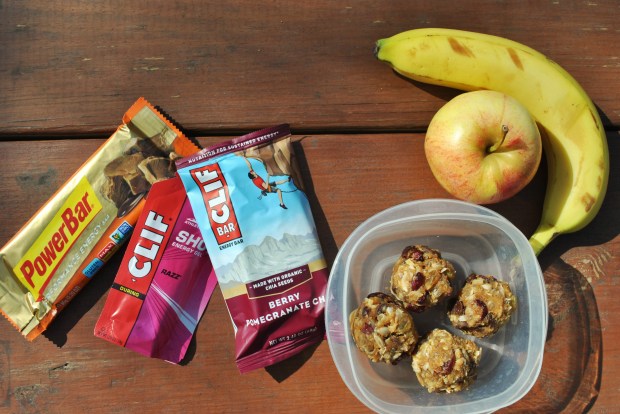
If there’s one thing I’ve learned from long-distance running, it’s the importance of food. Until last year, I lived by an “I’m hungry, therefore I eat” philosophy. But half-marathon training forced me to switch over to an “I need energy, therefore I eat” mindset. Before each long run, I have to calculate my intake and purposely feed myself enough calories to sustain me for that amount of activity.

Our bodies are amazing machines that are constantly functioning. All this living we do requires energy and we get that energy from food. We open our mouths, put it in, chew and swallow, and then our digestive system takes over – breaking our food down into smaller pieces so the fats, carbohydrates, proteins, and vitamins can be absorbed and converted into energy.

DSC_1556-01

God’s love is the most rich and powerful substance in the universe. Not only does He love, 1 John 4:8 says “God is love”. His every move in our lives is defined by His affection toward and preference for us.* Created with purpose, cared for every moment, and fully accepted with no condemnation for our weaknesses or sin (1 John 3:20), we are “lavished” with this love (1 John 3:1).

With God’s Spirit alive and at work in me, His love is always readily available for me to consume. Just thinking about it allows me to take it in and begin the process of absorbing it into the depths of my being. It’s a satisfying and fulfilling kind of love that sustains us and even gives us our identity.

Or at least it should.

A couple weeks ago at Mom’s Bible study, we were discussing “The Comparison Trap”.** As moms – and as humans in general – it’s so easy to look around and use what our eyes see in others as a measuring tool for our own value. We see someone’s clothing size, well-kept house, well-behaved children, creative talent, or dynamic personality and then turn those strengths around to magnify the weaknesses we see in ourselves.

The antidote for this, Andy & Sandra Stanley explain, is understanding God’s great love for us. As adopted sons and daughters, our value is decided by Him and when we take that truth to heart, we can stop looking around for other measurements.**

I’ve known about God’s love for as long as I can remember. It may have been mere “head knowledge” when I was a kid, but it has become “heart knowledge” as an adult. I’m fully convinced that God loves me and and yet I still catch myself looking around for my value. I spend regular time ingesting the truth about His love into my system, but that hasn’t prevented me from getting caught in the comparison trap.

In those seasons of discouragement and self-doubt, I’ve found this to be true: God’s love was never meant to just be absorbed, it was meant to be converted into useful energy. 1 John 4:19 says, “We love because he first loved us” or in other words, because He loves us, we love. Sitting around and absorbing God’s love isn’t going to do me much good until I complete the cycle and use it to love others.

When my focus is on loving other people, I don’t have time to think about comparison. Instead of being worried about where I’m lacking, I’m worried about the needs of others and how much I do have that can help them. As my hands and feet serve, my purpose becomes greater than my “self”. And when my heart is engaged in loving people who don’t deserve it, I can’t help but understand how much I’m loved and how little all the things on that comparison list matter.

The more I run, the more hungry I am. On those long run days, I can’t stop eating! Because I used up everything I took in, my body needs more and it definitely lets me know!

DSC_1565-01

(And in case you’re comparing yourself to my healthy-ish (?) looking lunch, you can stop there because you know I end my day with a ‘healthy’ serving of this:)

DSC_1592-01

When we’re using up the love we’ve been filled with, we’ll be hungry for more and the more He becomes our desire, the more “the world and its desires pass away” (1 John 2:17). His rich, satisfying, value-giving love becomes even more rich, satisfying, and value-giving when we give it away!

*http://biblehub.com/greek/26.htm
**https://www.comparisontrap.org/ by Andy & Sandra Stanley

Enter your email address to subscribe to this blog and receive notifications of new posts by email.

Care

Sheep. Cute, cuddly, soft, and sweet. Don’t ya just wanna snuggle one?

No, you don’t! As a Vermonter by childhood, I got to experience sheep first hand. Maybe it was because I was allergic to them, but I remember them being annoying and dirty. Their rough wool was not something you wanted to pet and boy, were they loud!

If you search for sheep videos on YouTube, you’ll also find they’re not very self-sufficient. Prone to wander and get themselves into perilous predicaments, sheep need help. When they do stick together, their herd-mentality and lack of awareness tends to get them in trouble. And without much of a ‘natural defense,’ sheep require the protection and care human hands, eyes, and minds can provide them.

sheep-3119307

As a mom, I can relate to those shepherds. In our busy life, with three kids on different school and activity schedules, I feed and move and protect and feed and move and protect. It’s exhausting on many days, but like all parents, I want my children to live in the security of knowing they are cared for!

More than my care, though, I want them to live in the security of knowing they are cared for by Someone much more capable than me. I want them to know that this God we pray to is not only big and strong and awesome – He’s also available to meet their daily personal needs.

But when your daily personal needs involve school, homework, playing, eating, and maybe a few chores, what do you really need God for? When I pray with our girls at night, I find myself struggling to come up with ways God may have helped them that day or could help them tomorrow – and I see their own struggle when I ask them how I can pray for them.

When David penned the verses of Psalm 23, he was speaking from experience. As a shepherd himself, David knew all about the care of sheep. Before battling Goliath, playing his harp for King Saul, or becoming king himself, David spent his days feeding and moving and protecting, feeding and moving and protecting.

In this well-known Psalm, David points out the similarities between his life of caring for sheep and his life of being cared for by God:

The LORD is my shepherd; I shall not want.
He makes me lie down in green pastures.
He leads me beside still waters. He restores my soul.
He leads me in paths of righteousness for his name’s sake.
Even though I walk through the valley of the shadow of death,
I will fear no evil, for you are with me;
your rod and your staff, they comfort me. (v. 1-4)

When David says, “I shall not want,” he wasn’t saying he didn’t have needs, he was saying he was so well cared for he wasn’t aware of those needs. Sheep, by nature, have little awareness of how they are being cared for – they have no way of perceiving all that is being done to keep them alive and well. They don’t know the predators they’ve been protected from and they never wonder how the shepherd will meet their next need – they just know they’re full and happy!

A few weeks ago Tim was away and it was a four-trips-to-the-school-and-back-for-swim-practices kind of night. The first practice was at 5:30, and around 5:10 I looked at the clock and thought, “I should tell Amelia it’s almost time to go.” But I had a mouth full of pita chips and I was busy with a project, so I decided to give her a couple more minutes.

Unfortunately, the next time I looked up, it was after 5:30. “Oh no!” I yelled and we went into full-on panic mode. Practice was already starting and my kid who can’t handle being late was going to be really late! I remember thinking, “How did this happen? God, why didn’t you help me?”

When we arrived at the middle school most of the other parents had come and gone, but it just so happened that another family was just as late as we were. And they just happen to be a family we know well and who lives near us and who we’ve carpooled with before. The dad looked at me and said, “Hey, I heard Tim’s away, can we give Amelia a ride home for you tonight?”

Could I have handled the four trips? Of course. But instead, I was given a moment of rest that I didn’t even know I needed. And it was all orchestrated outside of my awareness. Sheep don’t perceive all that is being done for them and my human brain will never perceive all that God is doing for me!

sunset-995726

After having just about enough of “That’s not mine, why do I have to pick it up?” and “I didn’t make that mess, they did!” Tim and I have started threatening to take a whole day (or week – the time seems to lengthen with each threat 😉) and stop doing anything for anyone but ourselves. We haven’t had to follow through yet, but I think our kids would be shocked at how much we do to care for them!

Our girls may have no idea how much we do for them, but we kind of like it that way and I think our Good Shepherd likes it that way, too. We can’t always label or pinpoint how He’s feeding, moving, or protecting us, but we can absolutely trust that His “goodness and mercy shall follow me all the days of my life” (v. 6).

Enter your email address to subscribe to this blog and receive notifications of new posts by email.